Added Sugars on Labels: The Names to Look For
Find added sugars on the Nutrition Facts label and in the ingredients list, with the names the Dietary Guidelines list and the 'sugar, syrup, -ose' rule.

Key takeaways
- Added sugars include sugars added in processing, sugars packaged as sweeteners, syrups, honey and concentrated fruit or vegetable juices; they do not include naturally occurring sugars in milk, fruits and vegetables.
- The Daily Value for added sugars is 50 grams per day based on a 2,000 calorie daily diet; 5% DV or less is low and 20% DV or more is high.
- On ingredient lists, look for ingredients that include the word "sugar" or "syrup" or end in "-ose", the 2025–2030 Dietary Guidelines tip.
- The Dietary Guidelines say to avoid sugar-sweetened beverages, such as sodas, fruit drinks, and energy drinks.
Two places on a package tell you about added sugars: the grams and percent Daily Value on the Nutrition Facts label, and the ingredients list, where sugar hides under a long list of names. Use the label to see how much, and the ingredients to see where it comes from.
Added sugars on the Nutrition Facts label
Total sugars include sugars naturally present in many nutritious foods and beverages, such as sugar in milk and fruits, as well as any added sugars. FDA adds that there is no Daily Value for total sugars because no recommendation has been made for the total amount to eat in a day.
Added sugars are a separate line. According to FDA, they include:
- sugars added during processing, such as sucrose or dextrose;
- foods packaged as sweeteners, such as table sugar;
- sugars from syrups and honey;
- sugars from concentrated fruit or vegetable juices.
They do not include naturally occurring sugars that are found in milk, fruits, and vegetables. The word “includes” before added sugars means the added grams are already counted inside total sugars.
FDA gives an example of yogurt with added sweeteners: 7 grams of added sugars and 8 grams of naturally occurring sugars, for a total of 15 grams of sugar, with the 7 grams representing 14% of the Daily Value.
| Label number | What FDA says |
|---|---|
| Daily Value for added sugars | 50 grams per day based on a 2,000 calorie daily diet |
| 5% DV or less | A low source of added sugars |
| 20% DV or more | A high source of added sugars |
| Total sugars | No Daily Value |
For more on the rest of the panel, see how to read a nutrition label.
Read the ingredients list for the names
The Nutrition Facts panel gives a number. The ingredients list tells you which sweeteners are in the product. FDA also says that looking at the ingredient list and reading all the information on the Nutrition Facts label can help you make the most informed choices.
The 2025–2030 Dietary Guidelines give a simple rule for spotting them: look for ingredients that include the word “sugar” or “syrup” or end in “-ose”.
The same document says added sugars may appear on ingredient labels under many different names, and lists the ones in the table below.
| Group | Names the Dietary Guidelines list |
|---|---|
| Contains “sugar” | cane sugar, beet sugar, turbinado sugar |
| Contains “syrup” | high-fructose corn syrup, agave syrup, corn syrup, rice syrup |
| Ends in “-ose” | fructose, glucose, dextrose, sucrose, maltose, lactose |
| Other names | fruit juice concentrate, honey, molasses |
Lactose is milk sugar, so its place on this list needs a word of context. The Dietary Guidelines name it among the names added sugars may appear under on ingredient labels, so watch for it in the ingredients list. The sugar that is naturally in plain milk is a different case: FDA’s definition of added sugars does not include naturally occurring sugars that are found in milk, fruits, and vegetables, and the guidelines say the sugars in fruits and plain milk are naturally occurring and are not considered added sugars.
The “-ose” rule is a way to spot sugars, not proof that a product is high in added sugar. A product can list one of these names far down the list or several of them near the top, so also check the grams and %DV.
A quick way to use this in the store: pick up two similar products, such as two flavored yogurts or two pasta sauces, and compare the “Includes added sugars” grams for the same serving size. Then read the ingredients on the one you like better. If you find “sugar”, “syrup” or an “-ose” word, you know where the added sugars come from, and you can decide whether it fits your day.
Single-ingredient products are the exception. FDA says labels on packages of single-ingredient sugars and syrups such as table sugar, maple syrup, or honey list the percent Daily Value for added sugars, so a jar of honey shows its %DV even though nothing else was added.
What the Dietary Guidelines say about added sugars
The 2025–2030 Dietary Guidelines are direct. Their wording is: “While no amount of added sugars or non-nutritive sweeteners is recommended or considered part of a healthy or nutritious diet, one meal should contain no more than 10 grams of added sugars.”
For snacks, the guidelines say added sugar limits should follow FDA “Healthy” claim limits. Their examples are that grain snacks such as crackers should not exceed 5 grams of added sugar per ¾ ounce whole-grain equivalent, and dairy snacks such as yogurt should not exceed 2.5 grams of added sugar per ⅔ cup equivalent. For children, they say to avoid added sugars during infancy and early childhood.
The 50-gram Daily Value on packages comes from FDA’s label page, which explains it with a Dietary Guidelines recommendation to limit calories from added sugars to less than 10 percent of total calories per day: on a 2,000 calorie daily diet, that would be 200 calories or 50 grams of added sugars per day. The 10-gram per-meal figure above is from the 2025–2030 guidelines themselves, so it is a separate number from the label’s Daily Value.
Drinks are the easiest place to find added sugars
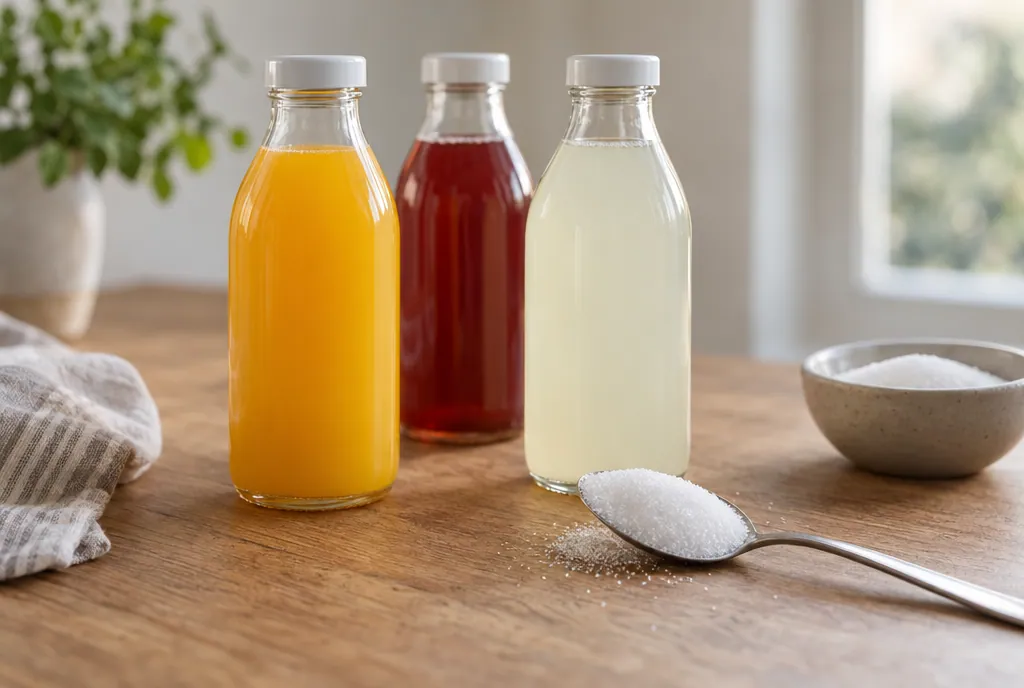
FDA says that for most Americans, the main sources of added sugars are sugar-sweetened beverages, baked goods, desserts, and sweets. The Dietary Guidelines say to avoid sugar-sweetened beverages, such as sodas, fruit drinks, and energy drinks.
On a drink label, check the serving size first. Then look at the “Includes added sugars” grams and the ingredients for the names above. Plain milk and unsweetened options have no added sugars to find, since naturally occurring sugars in milk are not considered added sugars. Our hydration basics guide covers what to drink instead.
Added sugar label-check checklist
- Check the serving size first
- Find “Includes added sugars” and its %DV
- Remember 5% DV or less is low and 20% DV or more is high
- Scan the ingredients for “sugar”, “syrup” and words ending in “-ose”
- Look for other names: fruit juice concentrate, honey, molasses
- Count how many different sweeteners are listed
- Compare two products with the same serving size
- Skip sugar-sweetened beverages when you can
For more label help, see healthy grocery list on a budget and the rest of Labels & Smart Shopping. This guide is general information; see our medical disclaimer.
Frequently asked questions
What is the difference between total sugars and added sugars?
Total sugars include sugars naturally present in foods like milk and fruit plus any added sugars. FDA says there is no Daily Value for total sugars, while the Daily Value for added sugars is 50 grams per day based on a 2,000 calorie daily diet.
Does honey count as an added sugar?
Yes, when it is added. FDA says added sugars include sugars from syrups and honey, and the Dietary Guidelines list honey among the names added sugars may appear under on ingredient labels. Single-ingredient sugars and syrups, like a jar of honey, are labeled with their %DV.
Do fruit and plain milk count as added sugars?
No. The Dietary Guidelines say that the sugars in foods and drinks such as fruits and plain milk are naturally occurring and are not considered added sugars. FDA says the same: added sugars do not include naturally occurring sugars found in milk, fruits and vegetables.
Are sweeteners like aspartame or sucralose added sugars?
The Dietary Guidelines list aspartame, sucralose, saccharin, xylitol and acesulfame K as examples of non-nutritive sweeteners, separate from the added sugar names such as corn syrup and sucrose. Note that sucralose ends in "-ose" but is on the non-nutritive list. The same guidelines say no amount of added sugars or non-nutritive sweeteners is recommended.