Meal Delivery for Older Adults: What to Look For
What to check when choosing meal delivery for an older adult: nutrition and sodium, easy-open packaging, safe reheating, delivery, cost, and community meals.
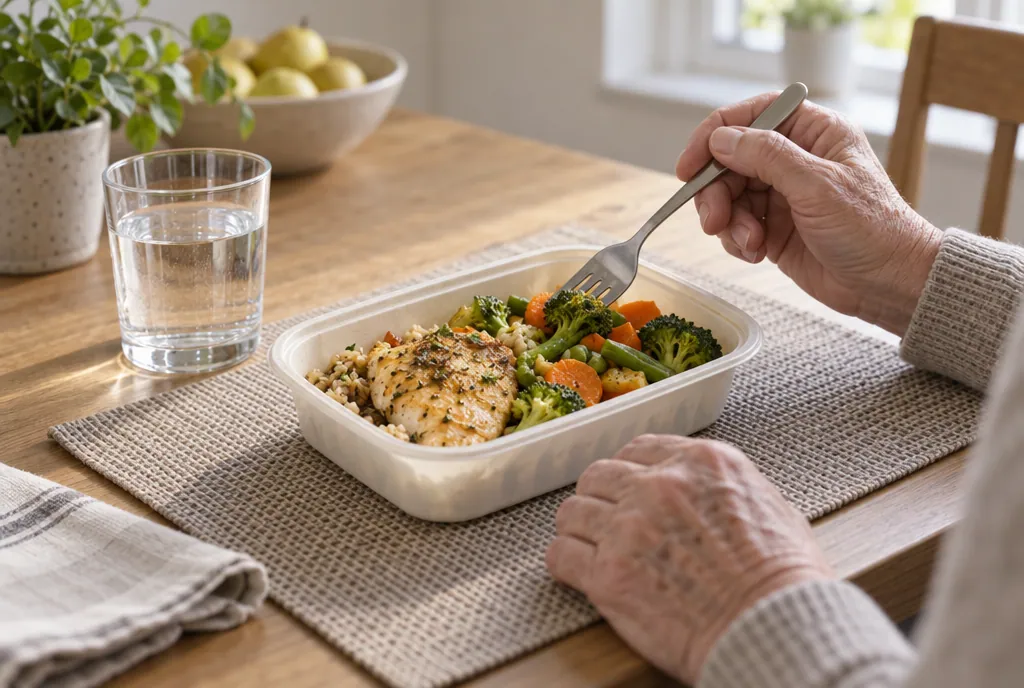
Key takeaways
- Read the Nutrition Facts for every meal. FDA says 5% Daily Value or less of sodium per serving is considered low and 20% or more is considered high, and the Daily Value for sodium is less than 2,300 mg per day.
- Check the practical details too: whether the package is easy to open, whether portions fit appetite, and whether the food needs chewing or swallowing changes your doctor has advised.
- FDA lists older adults among the groups at higher risk of foodborne illness, so follow each meal's package reheating directions. For leftovers, FSIS says to reheat to 165 degrees F as measured with a food thermometer.
- Plan for the delivery itself: who is home to receive it, where it will be kept cold, and what happens when a box is late.
- Meal delivery is not the only option. NIA mentions food delivery services and meals at a nearby senior center, community center, or religious facility, and points to the Eldercare Locator.
Choosing meal delivery for yourself or a parent comes down to a few questions you can check before the first box arrives: is the food a good fit nutritionally, can the person open and eat it easily, can it be kept and reheated safely, and will someone be there to take it in? This guide walks through each one.
Start with nutrition and sodium
Ask the service for the full Nutrition Facts and ingredient list for each meal, not just the marketing description. Then look at the same things you would on any package. Our guide to eating well as you get older covers the bigger picture of what a day of meals can look like.
Sodium deserves a close look because prepared meals can be salty. FDA’s sodium page says the Daily Value for sodium is less than 2,300 mg per day and that, as a general guide, 5% Daily Value or less per serving is considered low and 20% or more is considered high. It also says taste alone is not an accurate way to judge sodium, so check the label rather than guessing.
NIA’s meal planning tips for older adults suggest choosing foods with little to no added sugar, saturated fats, and sodium, and adding fruits and vegetables to meals and snacks. If the delivered meals are light on produce, you can add a side of fruit or vegetables; NIA suggests looking for pre-cut varieties if slicing and chopping are a challenge.
Look at the practical details
A meal that looks good on paper only helps if it gets eaten. Before committing, ask or check:
- Opening and handling. Can the person peel the film, pull the tab, or lift a heavy tray? Ask for a sample or a photo of the packaging.
- Portion size. Some people fill up sooner than they used to. NIA says changes in the body as you age can cause some people to feel full sooner than they did when younger. Smaller portions or an option to order fewer meals may be a better fit.
- Texture and chewing. Ask how the service describes texture, and whether any meals are soft or moist. Read on for when to involve a doctor.
- Preparation. Microwave-only, oven, or stovetop? Confirm the person has the equipment and can use it safely.
- Taste and variety. NIA notes that growing older, dental problems, and medication side effects can change taste and smell, and suggests varying the shape, color, and texture of foods. A menu with real variety helps.
Food safety for older adults
FDA says that as people age, their immune system and other organs become sluggish in recognizing and ridding the body of harmful bacteria and other pathogens, and that vulnerable people are more likely to have a lengthier illness, undergo hospitalization, or even die. That is why handling matters more here.
For reheating a delivered meal, follow its package directions. The 165 degrees F figure is FSIS guidance for leftovers, not a rule for every delivered meal: FSIS says to reheat leftovers to 165 degrees F as measured with a food thermometer, to cover food while reheating, and to check the temperature in several places because microwaves have cold spots. A cheap food thermometer is worth keeping in the kitchen.
FDA’s list of foods to avoid for people at greater risk includes raw or undercooked meat or poultry and hot dogs and deli-style meats unless reheated until steaming hot. If a menu includes those, check the directions before serving.
Delivery, cost and terms
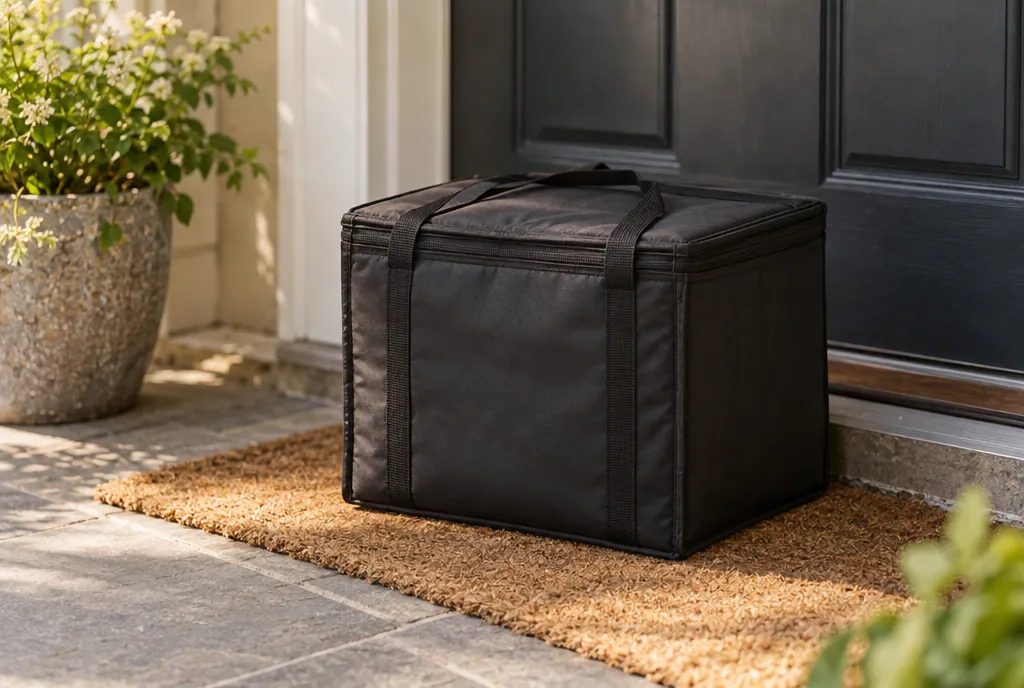
Reliability is part of food safety. Ask what the delivery window is, whether a signature or in-person handoff is needed, and what happens if no one answers the door. If the person lives alone, line up a neighbor, relative, or building desk to bring the box inside, and put the contact in the account notes.
Then look at the money. Compare the price per meal after any introductory offer, plus shipping and any minimum order, and read the skip, pause, and cancel terms before you enter a card. Keep screenshots of the plan, price, and cancellation steps. Our guides on how to choose a healthy meal delivery service and meal kits vs prepared meal delivery go deeper, and the compare page can help you shortlist. If the person also needs a gluten-free, vegetarian, or allergy-safe menu, see meal delivery for special diets. More options live in the Meal Delivery, Kits & Programs hub.
Which type fits?
Prepared meals
Fully cooked meals are often the least work: open, heat, eat. The tradeoffs are sodium (check each label), portion size, and whether the freezer and microwave have room and work well. They suit someone who cannot stand at the stove for long.
Meal kits
Kits include pre-portioned ingredients and recipe steps. NIA notes that some meal delivery systems include step-by-step instructions and pre-portioned ingredients, which can help someone who enjoys cooking. They are harder if chopping, lifting pans, or following steps is a challenge, and raw ingredients bring more food handling.
Community meal programs
NIA suggests looking into having some meals at a nearby senior center, community center, or religious facility, where you can enjoy a free or low-cost meal and some company. NIA says to visit the Eldercare Locator to search for centers in your area. These are not delivery companies, so ask locally about schedules, eligibility, and cost.
What to check, side by side
| What to check | Why it matters | What to ask or look for |
|---|---|---|
| Nutrition Facts | Meals vary a lot | Full label and ingredients for every meal |
| Sodium | Prepared meals can be salty | Per-serving mg and % Daily Value, per FDA |
| Packaging | Hard-to-open food goes uneaten | Pull tabs, light trays, large print |
| Texture and portion | Chewing, swallowing, and appetite differ | Descriptions, smaller portions, doctor’s advice |
| Reheating | Higher risk of foodborne illness | Clear directions, microwave wattage, food thermometer |
| Delivery | Perishable food cannot wait | Time window, who receives it, fridge space |
| Cost and terms | Offers can change after the first box | Price per meal, shipping, skip and cancel steps |
Older adult meal delivery checklist
- Get the Nutrition Facts and ingredients for each meal.
- Check sodium per serving against the doctor’s advice.
- Ask a doctor or dietitian about any special diet or swallowing needs.
- Confirm the person can open the packaging and use the heating equipment.
- Buy or find a food thermometer and note the reheating directions.
- Name someone to bring the delivery inside, and clear fridge or freezer space.
- Compare the real price per meal and read the cancel terms.
- Look up local senior center or community meals through the Eldercare Locator as a backup.
- Set a reminder to review the plan after two weeks.
Frequently asked questions
How much sodium is too much in a delivered meal?
Compare the Nutrition Facts label with your doctor's advice. FDA says the Daily Value for sodium is less than 2,300 mg per day, and that 5% Daily Value or less per serving is considered low while 20% or more is considered high. Some people have a lower limit set by their doctor.
Does a delivered meal need to be reheated to 165 degrees F?
Follow the meal's own package directions. The 165 degrees F figure is FSIS guidance for leftovers: FSIS says to reheat leftovers to 165 degrees F as measured with a food thermometer. It also says microwaves have cold spots, so check the temperature in several places. If the package directions are unclear, ask the service.
Where can an older adult find free or low-cost meals nearby?
NIA suggests looking into meals at a nearby senior center, community center, or religious facility, which can be free or low cost, and says you can use the Eldercare Locator to search for centers in your area. Availability and eligibility vary by location.
What if the person has trouble chewing or swallowing?
Talk to a doctor first. NIA says to see a dentist if chewing is hard, and to talk to your doctor if food seems stuck or is hard to swallow. Ask any meal service whether it can describe food textures, and share the answer with the care team.
Sources
- Sodium in Your Diet — U.S. Food and Drug Administration
- People at Risk of Foodborne Illness — U.S. Food and Drug Administration
- Leftovers and Food Safety — USDA Food Safety and Inspection Service
- Overcoming Roadblocks to Healthy Eating — National Institute on Aging
- Healthy Meal Planning: Tips for Older Adults — National Institute on Aging