Meal Kit Food Safety: What to Check When a Delivery Arrives
Check the cold source, take the temperature of perishables on arrival, store raw meat safely and cook to FSIS minimum temperatures. Here is what to do and when.
Key takeaways
- Open perishable deliveries right away: FSIS says food should arrive frozen or partially frozen, or at least refrigerator cold, below 40°F as measured with a food thermometer.
- If perishable food arrives warm, above 40°F, notify the company and do not consume or even taste the food.
- Cook to the right temperature: 165°F for all poultry, 160°F for ground meats and 145°F for fish and shellfish, measured with a food thermometer.
- Follow the four steps FSIS lists: clean, separate, cook and chill.
When a box of raw chicken or fish lands on your porch, the first five minutes matter most. Open it, find the coldest item, take its temperature and decide whether to keep it. The steps below cover that check, how to store and handle what is inside, and the temperatures to cook to.
Check the delivery the moment it arrives
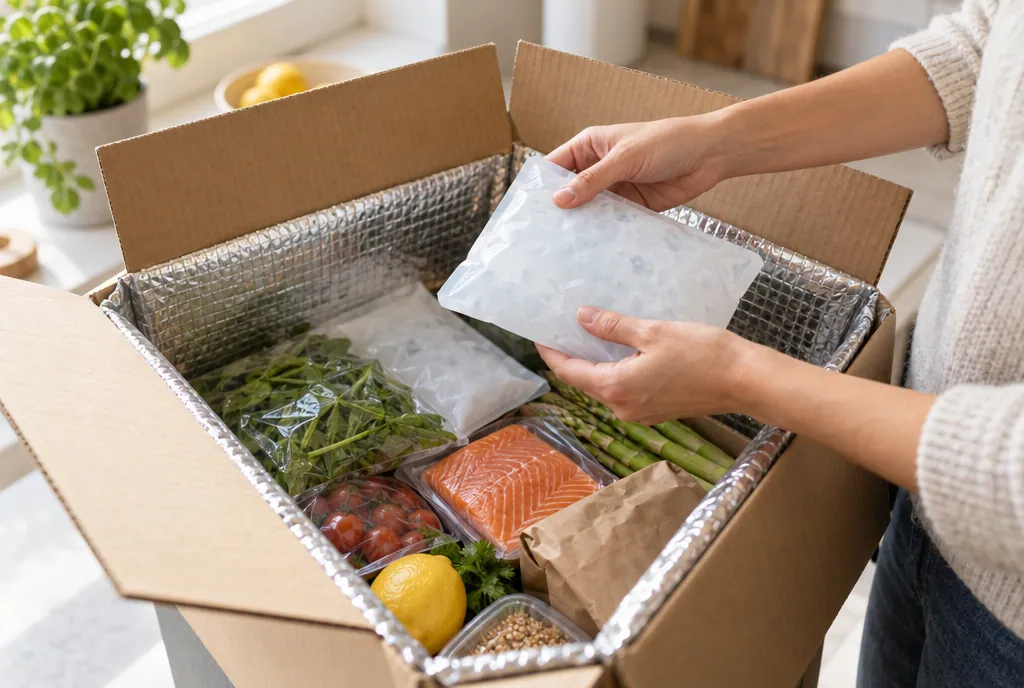
FSIS has a short checklist for mail-order food, and it applies to any perishable box. Perishable items like meat or poultry should be sent cold or frozen and packed with a cold source, in foam or heavy corrugated cardboard. The same page says the food should be delivered as quickly as possible, ideally overnight, and that the outer package and perishable items should be labeled “Keep Refrigerated.”
Then do the test that counts. When you receive a food item marked “Keep Refrigerated,” open it immediately and check its temperature. Use a food thermometer on the food itself, not on the box or the ice pack.
FSIS also points out that even if a product is smoked, cured, vacuum-packed or fully cooked, it is still a perishable product and must be kept cold. A sealed pouch is not a reason to skip the check.
Box arrives cold
Good. FSIS says the food should arrive frozen or partially frozen with ice crystals still visible or at least refrigerator cold, below 40°F. Put raw meat, poultry and seafood in the refrigerator or freezer right away, and keep the rest of the cold items together while you unpack.
Box arrives warm
Stop. FSIS says that if perishable food arrives warm, above 40°F as measured with a food thermometer, you should notify the company, not consume the food and not even taste suspect food. Take photos of the packaging, the thermometer reading and the shipping label, and keep the box until the company replies.
Nobody home at delivery
FSIS advises that someone be there to receive perishable shipments and says not to have perishable items delivered to an office unless you know it will arrive on a work day and there is refrigerator space. If you cannot be home, choose a delivery window when someone can be, or ask a neighbor to bring the box in. When you get it, take its temperature before you decide it is fine. FSIS says perishable foods should not be held at temperatures between 40 and 140°F, the “Danger Zone”, for longer than 2 hours, because pathogenic bacteria can grow rapidly there.
Unpack and store raw meat, poultry and seafood
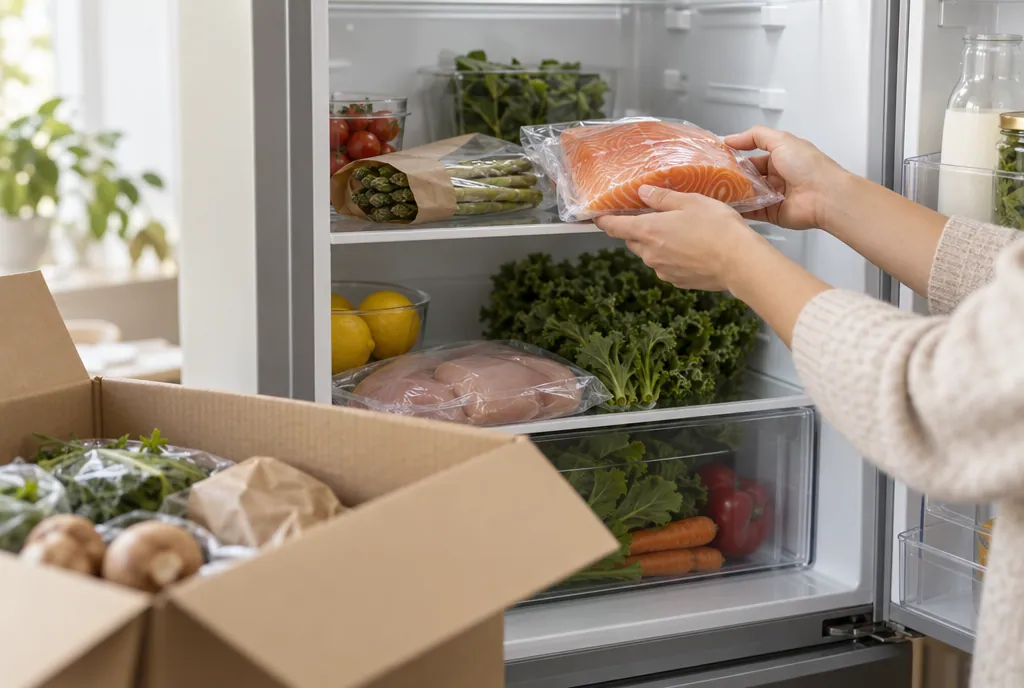
Unpack the raw proteins first and put them in the refrigerator or freezer, then handle the produce and pantry items. Keep raw meat, poultry and seafood in their sealed packages, and set them on a low shelf or a plate so juices cannot drip onto other food.
FSIS gives refrigerator and freezer times for mail-order foods, based on the condition the food is in when it arrives. The freezer times are for quality only because FSIS notes that freezing keeps food safe indefinitely.
| Food | Arrives | Refrigerator, 40°F | Freezer, 0°F |
|---|---|---|---|
| Beef and lamb steaks and roasts | Frozen or refrigerator cold | 3-5 days | 1 year |
| Pork chops and roasts | Frozen or refrigerator cold | 3-5 days | 6 months |
| Whole uncooked turkey | Frozen or refrigerator cold | 1-2 days | 1 year |
| Frozen entrees, seafood | Frozen | 2 days after thawing | 1 year |
| Frozen entrees, meat or vegetable | Frozen | 3-4 days after cooking | 2-3 months, cook frozen |
Times above come from the FSIS mail-order food safety chart. If your kit lists a use-by date that is sooner, follow the sooner date.
Keep raw and ready-to-eat food apart
FSIS sums up safe handling in four steps. Clean: wash hands and surfaces often. Separate: separate raw meat from other foods. Cook: cook to the right temperature. Chill: refrigerate food promptly.
In a meal kit, that means:
- Open the raw protein pack last, and only after your produce is washed and cut.
- Use one cutting board for raw meat and another for vegetables, or wash the board before changing foods.
- Wash your hands, knife and counter after touching raw meat, poultry or seafood, and before touching anything else.
- Never put cooked food back on a plate that held raw meat.
Cook to the safe minimum temperature
Recipe cards often give times. Times vary with the pan and the thickness of the food, so rely on a thermometer. FSIS says to cook all food to these minimum internal temperatures, as measured with a food thermometer, before removing food from the heat source.
The table lists the same values, including rest time, from the FSIS Safe Minimum Internal Temperature Chart.
| Food | Minimum internal temperature |
|---|---|
| Beef, pork, veal and lamb steaks, chops and roasts | 145°F and allow to rest for at least 3 minutes |
| Ground meats | 160°F |
| Ground poultry | 165°F |
| All poultry (breasts, whole bird, legs, thighs, wings, ground poultry, giblets and stuffing) | 165°F |
| Eggs | 160°F |
| Fish and shellfish | 145°F |
| Leftovers | 165°F |
| Casseroles | 165°F |
Insert the thermometer into the thickest part of the food. For a meal kit that means the thickest part of a chicken thigh or the center of a burger patty. If the reading is low, keep cooking and test again.
Thaw and keep leftovers safely
Some kits ship frozen proteins. FSIS says there are three safe ways to thaw food: in the refrigerator, in cold water and in the microwave, and that it is safe to cook foods from the frozen state. FSIS says food thawed by the cold water method or in the microwave should be cooked immediately after thawing.
For what is left on the plate, FSIS says leftovers can be kept in the refrigerator for 3 to 4 days or frozen for 3 to 4 months, and that reheated leftovers should reach 165°F as measured with a food thermometer.
Delivery-day checklist
- Open the box as soon as it arrives
- Check the outer package and perishable items for a “Keep Refrigerated” label and a cold source
- Take the temperature of a raw protein with a food thermometer
- Refrigerate or freeze raw meat, poultry and seafood right away
- If anything is above 40°F, do not eat it and contact the company
- Store raw proteins below ready-to-eat food
- Use separate boards and wash hands after raw food
- Cook to the minimum temperature and check it with a thermometer
Choosing a service to begin with? See how to choose a healthy meal delivery service, meal kits vs prepared meal delivery and compare options in our meal delivery comparison. For more, browse Meal Delivery, Kits & Programs. This guide is general information; see our medical disclaimer.
Frequently asked questions
How cold should a meal kit be when it arrives?
FSIS says perishable food should arrive frozen or partially frozen with ice crystals still visible, or at least refrigerator cold, below 40°F as measured with a food thermometer. Check the temperature of the food itself, not just the ice packs.
Can I rely on the look and smell to judge a warm delivery?
No. FSIS says pathogenic bacteria can grow rapidly in the Danger Zone of 40 to 140°F, but may not change the taste, smell or appearance of a food. If perishable food arrives above 40°F, notify the company and do not consume or taste it.
Is it safe to thaw frozen kit proteins on the counter?
No. FSIS says perishable foods should never be thawed on the counter or in hot water. The three safe methods it lists are the refrigerator, cold water and the microwave, and it is safe to cook foods from the frozen state.
Who can I call about a questionable delivery?
FSIS lists the USDA Meat and Poultry Hotline at 1-888-674-6854 (weekdays, 10 a.m. to 6 p.m. ET) for meat, poultry and egg products, and the FDA Outreach and Information Center at 1 (888) 723-3366 (weekdays, 10 a.m. to 4 p.m. ET) for other foods. Contact the company too.