Healthy Fats: Saturated, Unsaturated and Trans Fats Explained
The difference between saturated, unsaturated and trans fats, what the 2025–2030 Dietary Guidelines say, food sources of each, and how to read fat on labels.
Key takeaways
- The 2025–2030 Dietary Guidelines say saturated fat "should not exceed 10% of total daily calories" and that significantly limiting highly processed foods will help meet this goal (Dietary Guidelines).
- Unsaturated fats (monounsaturated and polyunsaturated) are the healthy fats; eating them in place of saturated and trans fats can benefit your health (MedlinePlus).
- The Daily Value for saturated fat is 20g, and for total fat it is 78g (FDA); trans fat has no %DV (FDA).
- Manufacturers can no longer add partially hydrogenated oils, the former main source of artificial trans fat, to foods (FDA).
You don’t need to avoid fat. You need the right mix: more unsaturated fats from foods like nuts, fish and olive oil, less saturated fat, and as little trans fat as you can manage. Most foods contain a combination of fats, so the goal is to tilt the balance, not to sort every bite (MedlinePlus).
Here’s how each type differs, what the current guidance says, and how to spot them on a label.
The main types of fat
Fats fall into two broad groups. Saturated fat and trans fat are the ones to limit, and they’re most often solid at room temperature (MedlinePlus). Monounsaturated and polyunsaturated fats are the healthy fats, and they tend to be liquid at room temperature (MedlinePlus).
| Fat type | Where you find it | What to know |
|---|---|---|
| Saturated | Butter, palm and coconut oils, cheese, red meat; also baked goods, fried foods, processed meats (MedlinePlus) | Raises LDL (bad) cholesterol (MedlinePlus) |
| Trans | Formerly mostly from partially hydrogenated oils; occurs naturally in milk, butter, cheese and meat products (FDA) | Raises LDL (bad) cholesterol (FDA) |
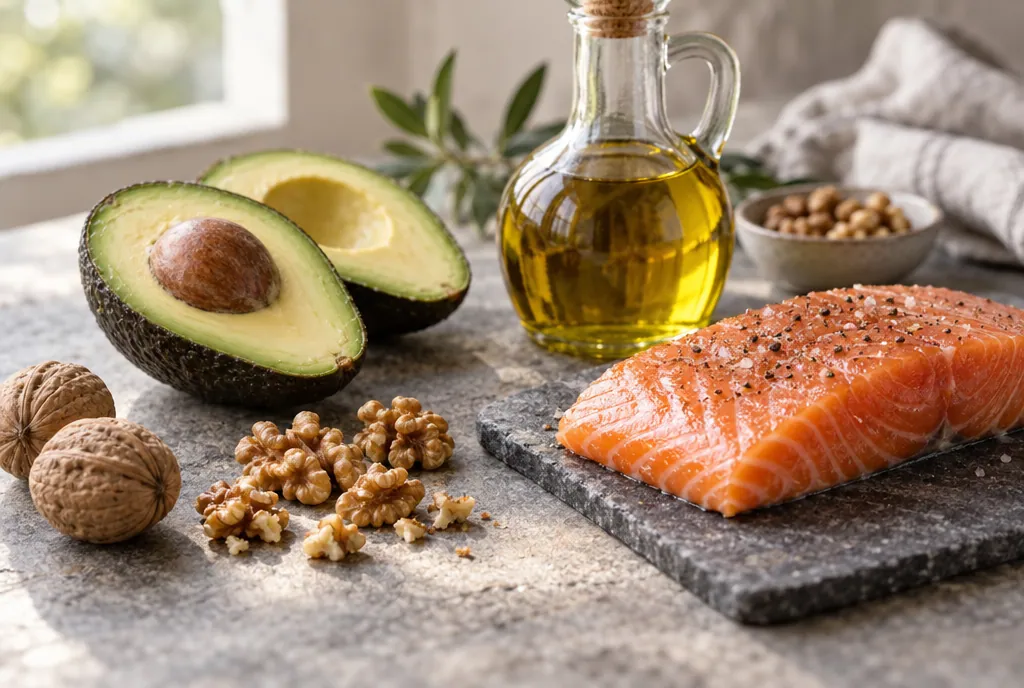
| Monounsaturated | Nuts, avocado, canola, olive, high-oleic safflower, sunflower and sesame oils, peanut oil and peanut butter (MedlinePlus) | Can help lower LDL cholesterol (MedlinePlus) |
| Polyunsaturated (incl. omega-3 and omega-6) | Walnuts, sunflower seeds, flax seeds, salmon, mackerel, herring, albacore tuna, trout, corn, soybean and safflower oils (MedlinePlus) | Includes essential fatty acids your body can’t make (MedlinePlus) |
Saturated fat
Saturated fat is found in all animal foods and some plant sources (MedlinePlus). Too much can cause cholesterol to build up in your arteries, and high LDL cholesterol increases your risk for heart disease and stroke (MedlinePlus). As an example, MedlinePlus says 1 tablespoon of butter contains 7 g of saturated fat (MedlinePlus).
Unsaturated fat
Monounsaturated fats help develop and maintain your cells (MedlinePlus). Polyunsaturated fats include omega-3 and omega-6 fats, which the body needs for brain function and cell growth (MedlinePlus).
MedlinePlus is clear that adding these fats on top of an otherwise unhealthy diet isn’t enough. The benefit comes from replacing saturated and trans fats with them (MedlinePlus).
Trans fat
In the past, most trans fat in foods came from partially hydrogenated oils (PHOs), made by turning vegetable oil into a solid fat (FDA). FDA determined in 2015 that PHOs are no longer “Generally Recognized as Safe,” and for most uses manufacturers could not add them to foods after June 18, 2018, with a final compliance date of January 1, 2021 (FDA).
Trans fat still occurs naturally in milk, butter, cheese and meat products from ruminant animals, and FDA’s actions did not affect those sources (FDA).
What the 2025–2030 Dietary Guidelines say
The Guidelines have a section titled “Incorporate Healthy Fats.” It says healthy fats are plentiful in many whole foods, “such as meats, poultry, eggs, omega-3-rich seafood, nuts, seeds, full-fat dairy, olives, and avocados” (Dietary Guidelines).
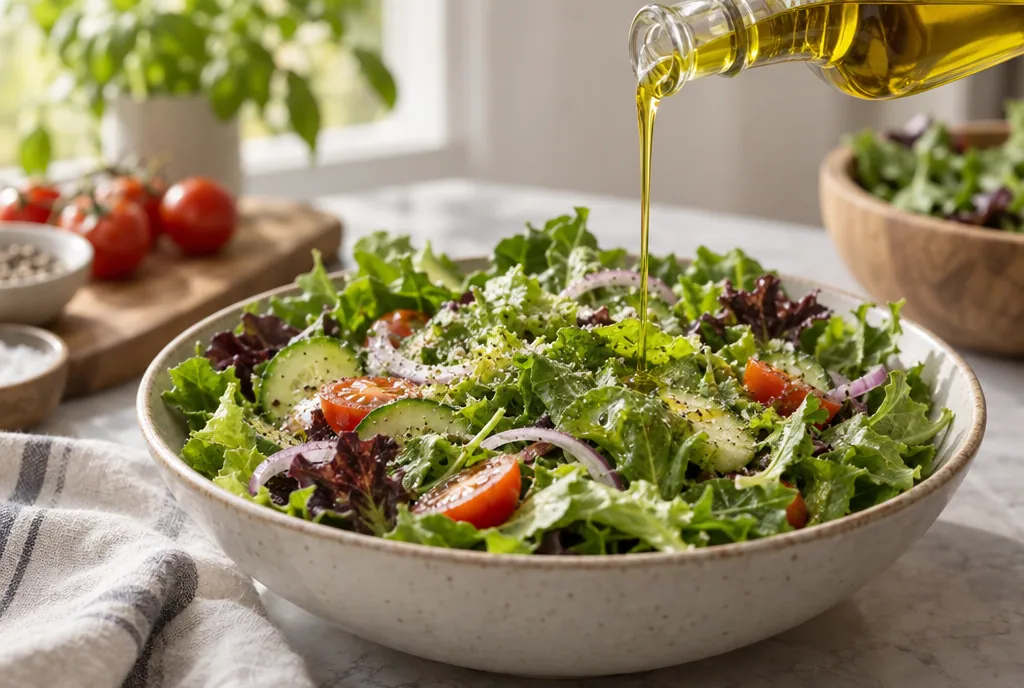
For cooking, the Guidelines say to “prioritize oils with essential fatty acids, such as olive oil,” and that “other options can include butter or beef tallow” (Dietary Guidelines).
On saturated fat, the wording is: “In general, saturated fat consumption should not exceed 10% of total daily calories. Significantly limiting highly processed foods will help meet this goal” (Dietary Guidelines). The Guidelines also note that more high-quality research is needed to determine which types of dietary fats best support long-term health (Dietary Guidelines).
For a 2,000-calorie diet, 10% works out to 200 calories, or 22 grams of saturated fat a day (MedlinePlus).
How heart-healthy advice compares
NHLBI’s heart-healthy eating advice also keeps saturated fat under 10% of daily calories, and suggests using vegetable oils such as olive and canola instead of butter, lard, and coconut and palm oils (NHLBI). It lists canola, corn, olive, safflower, sesame, sunflower and soybean oils as choices (NHLBI).
The two sources agree on olive oil and on keeping saturated fat within a limit. They differ on butter and full-fat dairy: NHLBI suggests lower-fat dairy instead of whole-milk products (NHLBI). If you have a heart condition, follow your care team’s advice.
Reading fat on the Nutrition Facts label
The label lists total fat, saturated fat and trans fat. Here’s what each line’s reference amount means:
| Label line | Daily Value | How to use it |
|---|---|---|
| Total fat | 78g (FDA) | Check it per serving, then multiply by the servings you eat |
| Saturated fat | 20g; eat “less than” this each day (FDA) | Choose foods lower in %DV more often |
| Trans fat | No %DV; FDA says experts could not set a reference value (FDA) | Look for partially hydrogenated oils in the ingredients |
As a general guide, 5% DV or less of a nutrient per serving is low and 20% DV or more is high (FDA). FDA suggests more often choosing foods lower in saturated fat (FDA).
MedlinePlus adds a simple trick: subtract saturated and trans fat from total fat, and the rest is unsaturated fat (MedlinePlus). Some labels list monounsaturated and polyunsaturated fat separately; some don’t. For a full walkthrough of the panel, see how to read a nutrition label.
Easy swaps for a better fat balance
These swaps come from MedlinePlus and NHLBI advice:
- Eat nuts or walnuts instead of cookies for a snack, keeping the portion small (MedlinePlus).
- Add avocado to salads and sandwiches instead of dressings and mayonnaise (MedlinePlus).
- Replace some red meat with skinless chicken or fish a few days a week (MedlinePlus).
- Sprinkle ground flax seed on your meal, or add walnuts or sunflower seeds to salads (MedlinePlus).
- Choose leaner, skinless meats instead of fatty cuts and chicken with skin (NHLBI).
Fish, beans and nuts also count toward your protein; see protein: how much you need. Nuts, seeds and avocados bring fiber too, covered in fiber food sources. Find more nutrient guides in the Nutrients Explained hub.
Your healthy fats checklist
- Cook with olive oil or another liquid vegetable oil most of the time.
- Eat fish such as salmon, sardines or trout regularly.
- Keep a small portion of nuts or seeds as a go-to snack.
- Check saturated fat %DV and compare similar foods.
- Scan ingredient lists for partially hydrogenated oils.
- Cut back on highly processed foods, fried foods and baked goods.
- Ask your doctor about fat limits if you have heart disease or take cholesterol medication.
Frequently asked questions
Is butter allowed in the new Dietary Guidelines?
The 2025–2030 Guidelines say to prioritize oils with essential fatty acids, such as olive oil, and that other options can include butter or beef tallow (Dietary Guidelines). Saturated fat should still not exceed 10% of daily calories. If you have heart disease or high cholesterol, ask your doctor which fats to use.
Does a label that says 0g trans fat mean there's none?
Not necessarily. Trans fat occurs naturally in foods from ruminant animals, such as milk, butter, cheese and meat, and FDA's actions on partially hydrogenated oils did not affect those natural sources (FDA). Check the ingredient list as well as the number.
Are all fats high in calories?
Yes. All fats contain 9 calories per gram, which is more than twice the amount in carbohydrates and protein (MedlinePlus). That's why MedlinePlus suggests keeping portions of nuts small even though they contain healthy fats.
Do I need to count omega-3s?
Most people don't need to count them. Omega-3 and omega-6 fats are essential fatty acids your body can't make, so you get them from food (MedlinePlus). Eating fish such as salmon or trout and adding walnuts or ground flax seed are simple ways to include them.
Sources
- Dietary Guidelines for Americans, 2025–2030 — USDA and HHS
- Facts about saturated fats — MedlinePlus
- Facts about monounsaturated fats — MedlinePlus
- Facts about polyunsaturated fats — MedlinePlus
- Trans Fat — FDA
- Daily Value on the Nutrition and Supplement Facts Labels — FDA
- How to Understand and Use the Nutrition Facts Label — FDA
- Heart-Healthy Living: Choose Heart-Healthy Foods — NHLBI