Fiber: Why It Matters and Everyday Food Sources
What dietary fiber is, how much you need, the 28g Daily Value, everyday high-fiber foods by group, and how to add fiber gradually without discomfort.
Key takeaways
- The Daily Value for dietary fiber is 28g, and FDA advises eating "at least" that amount on most days (FDA).
- MedlinePlus says Americans eat about 16 grams of fiber a day on average, while the recommendation for older children, adolescents and adults is 21 to 38 grams (MedlinePlus).
- Get fiber from a mix of vegetables, fruits, whole grains, beans and nuts, since most high-fiber foods contain both soluble and insoluble fiber (MedlinePlus).
- Add fiber gradually over a few weeks and drink plenty of fluids to avoid gas, bloating and cramps (MedlinePlus).
Most people can get more fiber by changing one thing at each meal: oats instead of a refined cereal, beans in the soup, fruit with the skin on. Go slowly, drink enough fluids, and your digestive system has time to adjust.
Here’s what fiber is, how much the guidance recommends, and which everyday foods are worth keeping in your kitchen.
What fiber is
Fiber is a substance found in plants, and dietary fiber, the kind you eat, is found in fruits, vegetables and grains (MedlinePlus). Your body can’t digest it, so it passes through your intestines without being absorbed much (MedlinePlus).
There are two forms, and both are useful:
- Soluble fiber attracts water and turns to gel during digestion, which slows digestion. It’s found in oat bran, barley, nuts, seeds, beans, lentils, peas and some fruits and vegetables (MedlinePlus).
- Insoluble fiber doesn’t dissolve in water. It’s in wheat bran, vegetables and whole grains, and it adds bulk to the stool (MedlinePlus).
You don’t need to sort your food by type. MedlinePlus says most high-fiber foods contain both, which is why eating a variety of vegetables, fruits, whole grains, legumes and beans makes sense (MedlinePlus).
Why fiber matters
Fiber adds bulk to your diet and makes you feel full faster, and it aids digestion and helps prevent constipation (MedlinePlus). FDA lists dietary fiber among the nutrients Americans generally don’t get enough of, and says a diet high in dietary fiber can increase the frequency of bowel movements and lower blood glucose and cholesterol levels (FDA).
The 2025–2030 Dietary Guidelines add that vegetables, fruits, fermented foods and high-fiber foods “support a diverse microbiome, which may be beneficial for health” (Dietary Guidelines). They also say to “prioritize fiber-rich whole grains” (Dietary Guidelines).
How much fiber you need
| Guidance | Amount | Source |
|---|---|---|
| Daily Value on US food labels | 28g, eat “at least” this amount on most days | FDA |
| Older children, adolescents and adults | 21 to 38 grams each day | MedlinePlus |
| Adults 19 to 50 (daily recommended intake) | 38g a day for men, 25g a day for women | MedlinePlus |
| Average US intake today | About 16 grams per day | MedlinePlus |
Younger children won’t be able to eat enough calories to reach these amounts, but MedlinePlus says it’s a good idea to introduce whole grains, fresh fruits and other high-fiber foods (MedlinePlus).
Everyday high-fiber foods
MedlinePlus groups high-fiber foods like this (MedlinePlus):
| Food group | Foods to eat more of |
|---|---|
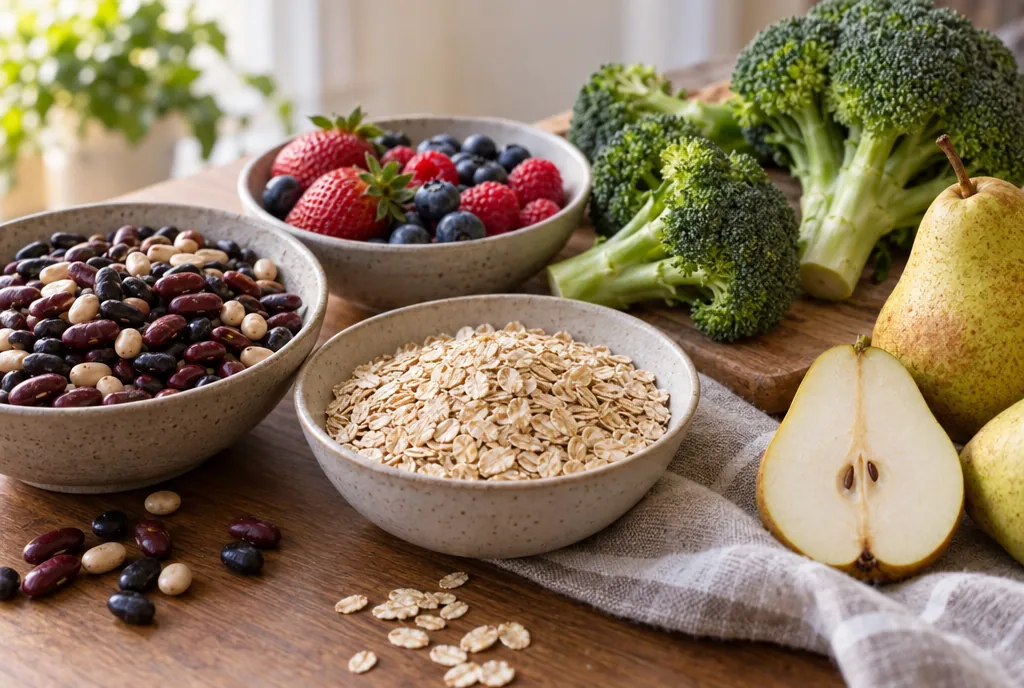
| Vegetables | Lettuce, Swiss chard, raw carrots, spinach; tender cooked asparagus, beets, mushrooms, turnips, pumpkin; baked potatoes and sweet potatoes with skin; broccoli, artichokes, squashes, string beans |
| Legumes | Lentils, black beans, split peas, kidney beans, lima beans, chickpeas |
| Nuts and seeds | Sunflower seeds, almonds, pistachios, pecans |
| Fruits | Apples, bananas, peaches, pears, tangerines, prunes, berries, figs and other dried fruits, kiwis |
| Grains | Oatmeal, whole-grain breads, brown rice, quinoa, popcorn, whole-wheat pastas, high-fiber cereals such as bran, shredded wheat and puffed wheat |
Whole-grain products have more fiber than refined grains, so choose whole-wheat bread over white and brown rice over white (MedlinePlus). To check that a bread or cereal really is whole grain, use whole grain labels.
Frozen, dried or canned vegetables and fruits “with no or very limited added sugars” can also be good options, according to the Dietary Guidelines (Dietary Guidelines). That makes a bag of frozen broccoli or a can of beans an easy shortcut; frozen and canned produce covers what to look for.
Fiber at each meal
The NHS gives example meals with their approximate fiber content (NHS). The NHS notes these are only illustrations, since the fiber in any food depends on how it is made or prepared and how much you eat (NHS). Use them to see how quickly a few swaps add up.
Breakfast
Two slices of wholemeal (whole-wheat) toast with peanut butter, followed by a medium orange, should give you around 8.3g of fiber (NHS).
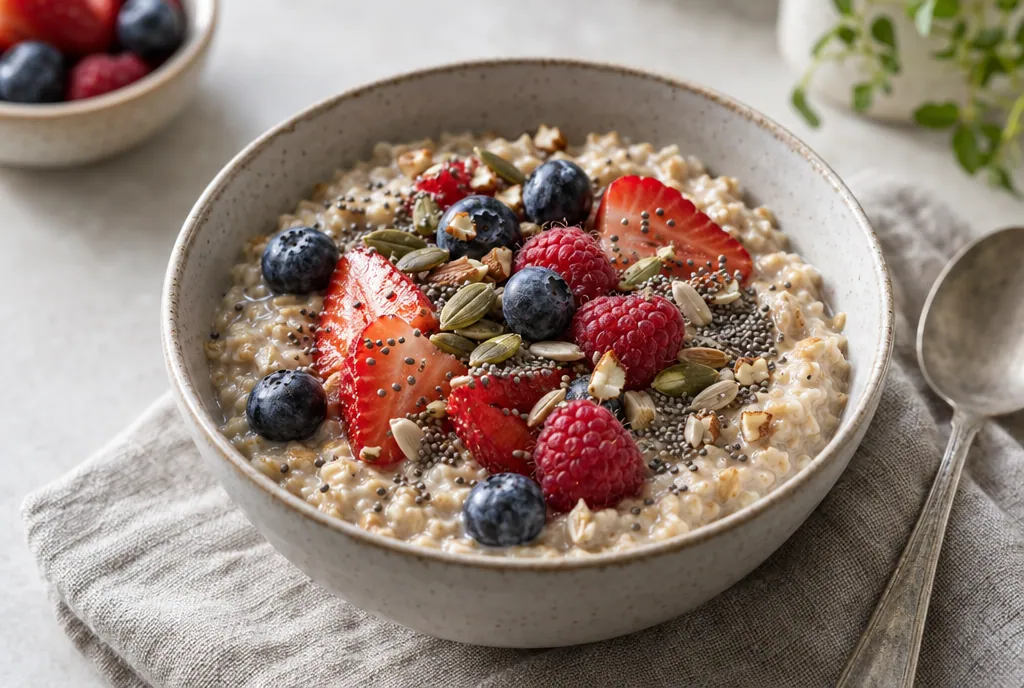
Oatmeal topped with berries or sliced pear is another easy option built from the foods in the table above.
Lunch
A lunch of wholemeal spaghetti with lentil and tomato sauce should give you around 11g of fiber (NHS).
At your desk, a whole-grain wrap with hummus and raw carrots, plus an apple, uses the same idea.
Dinner
Grilled chicken breast with a skin-on baked potato, carrots and green beans should give you around 11.2g of fiber (NHS).
The NHS also suggests adding pulses like beans, lentils or chickpeas to stews, curries and salads (NHS).
Add fiber slowly, with fluids
Eating a lot of fiber in a short time can cause gas, bloating and cramps. MedlinePlus says this often goes away once the natural bacteria in your digestive system get used to it, and recommends adding fiber gradually over a period of a few weeks (MedlinePlus).
Fluids matter too. Water helps fiber pass through the digestive system, and MedlinePlus suggests plenty of fluids, about 8 glasses of water or noncaloric fluid a day (MedlinePlus). If you get bloating or gas, you’ve probably increased too fast; cut back for a few days (MedlinePlus). For more on drinks, see hydration basics.
Reading fiber on the label
Find “Dietary Fiber” under Total Carbohydrate on the Nutrition Facts label. As a general guide, FDA says 5% DV or less of a nutrient per serving is low and 20% DV or more is high (FDA). For fiber, FDA suggests choosing foods higher in %DV more often (FDA).
Compare foods using the same serving size, and remember the fiber number doesn’t tell you whether a food is whole grain. If you’re shopping in the UK, the NHS says high-fibre foods have 6g or more of fibre in every 100g (NHS). More label tips are in how to read a nutrition label, and related nutrients are in the Nutrients Explained hub.
Your fiber checklist
- Swap one refined grain a day for a whole grain.
- Add beans, lentils or chickpeas to a soup, salad or stew this week.
- Eat edible peels on fruits and vegetables after washing them.
- Keep frozen vegetables and canned beans on hand for busy nights.
- Snack on fresh fruit, vegetable sticks, oatcakes or unsalted nuts or seeds, as the NHS suggests (NHS).
- Increase fiber over a few weeks, not all at once.
- Drink plenty of fluids as you add fiber.
- Check “Dietary Fiber” %DV when comparing packaged foods.
Frequently asked questions
Is it better to eat fruit with the skin on?
Usually, if the skin is edible. MedlinePlus notes that taking the peels off fruits and vegetables reduces the amount of fiber you get (MedlinePlus). Wash produce thoroughly first, as the Dietary Guidelines advise (Dietary Guidelines).
Do cooked vegetables still have fiber?
Yes. MedlinePlus says fiber-rich foods offer health benefits when eaten raw or cooked (MedlinePlus), and its high-fiber food list includes tender cooked vegetables such as asparagus, beets and pumpkin (MedlinePlus).
Can you eat too much fiber?
Eating a lot of fiber in a short time can cause gas, bloating and cramps, and too much may interfere with absorption of minerals such as iron, zinc, magnesium and calcium (MedlinePlus). Increasing slowly helps your digestive system adjust.
Does fiber-fortified food count the same as beans or whole grains?
MedlinePlus says to try to eat foods that are naturally high in fiber, because foods artificially fortified with fiber often do not deliver the same health benefits and may worsen bloating and gas (MedlinePlus).