Calcium and Vitamin D: Food Sources and Daily Values
How much calcium and vitamin D you need by age, the Daily Values on food labels, and everyday foods, fortified picks and label checks that help you get both.
Key takeaways
- The Daily Value on food labels is 1,300 mg for calcium and 20 mcg for vitamin D (FDA).
- Most adults 19–50 need 1,000 mg of calcium a day, and adults 19–70 need 15 mcg (600 IU) of vitamin D (ODS calcium, ODS vitamin D).
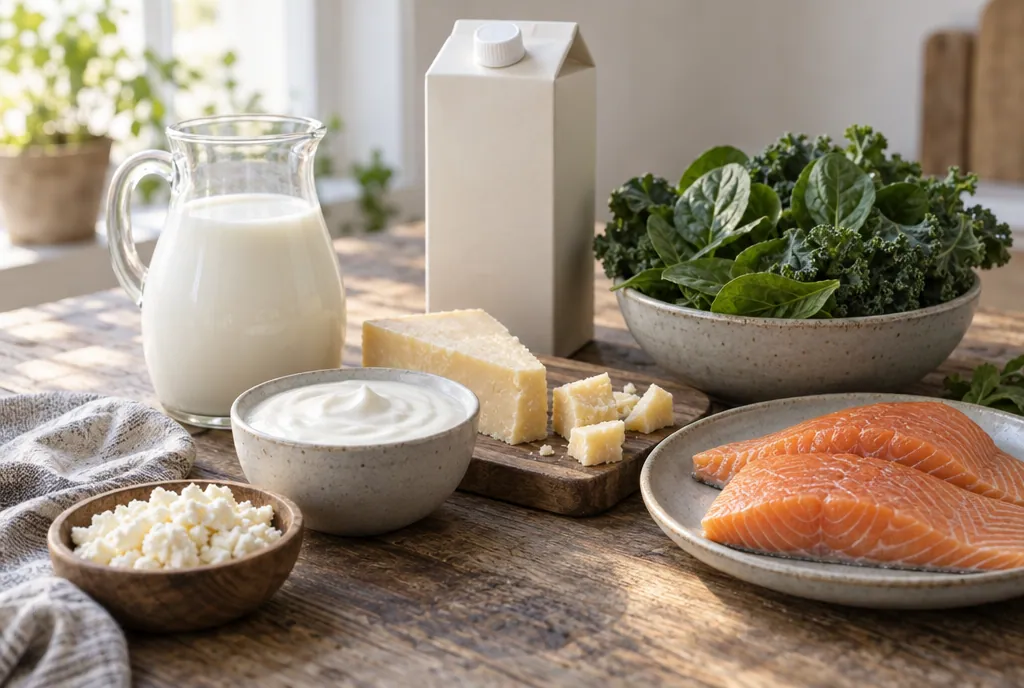
- Milk, yogurt and cheese are the main calcium sources for most people in the US; canned sardines and salmon with bones, kale, broccoli and bok choy also count (ODS).
- Very few foods naturally contain vitamin D, so fortified foods supply most of it in US diets; check the Nutrition Facts label (ODS).
- Vitamin D and calcium both must be listed on the Nutrition Facts label, and 20% DV or more per serving is considered high (FDA).
Calcium and vitamin D work as a team: vitamin D helps your body absorb calcium (ODS). Below you’ll find how much of each you need, which everyday foods supply them, and how to read the label so you can compare a carton of soy beverage with a tub of yogurt in a few seconds.
What calcium and vitamin D do
Almost all the calcium in your body is stored in your bones and teeth, giving them structure and hardness (ODS). Your body also needs calcium for muscles to move and for nerves to carry messages between your brain and the rest of your body.
Vitamin D helps you absorb calcium, one of the main building blocks for strong bones (ODS). Your muscles and nerves need it too, and your immune system uses it to fight off bacteria and viruses.
That partnership is why the two nutrients often show up together. MedlinePlus notes that milk is fortified with vitamin D because vitamin D is needed to help your body use calcium (MedlinePlus).
How much you need by age
The amounts below are the average daily recommended amounts from the NIH Office of Dietary Supplements, taken from the ODS calcium fact sheet and the ODS vitamin D fact sheet.
| Life stage | Calcium (ODS) | Vitamin D (ODS) |
|---|---|---|
| Birth to 6 months | 200 mg | 10 mcg (400 IU) |
| Infants 7–12 months | 260 mg | 10 mcg (400 IU) |
| Children 1–3 years | 700 mg | 15 mcg (600 IU) |
| Children 4–8 years | 1,000 mg | 15 mcg (600 IU) |
| Children 9–13 years | 1,300 mg | 15 mcg (600 IU) |
| Teens 14–18 years | 1,300 mg | 15 mcg (600 IU) |
| Adults 19–50 years | 1,000 mg | 15 mcg (600 IU) |
| Adults 51–70 years | Men 1,000 mg; women 1,200 mg | 15 mcg (600 IU) |
| Adults 71 years and older | 1,200 mg | 20 mcg (800 IU) |
| Pregnant and breastfeeding teens | 1,300 mg | 15 mcg (600 IU) |
| Pregnant and breastfeeding women | 1,000 mg | 15 mcg (600 IU) |
Note the jumps for women at 51 and everyone at 71. For older adults, see eating well as you get older.
Food sources of calcium
ODS says milk, yogurt and cheese are the main food sources of calcium for most people in the United States (ODS). Canned sardines and salmon with bones contain calcium, and so do certain vegetables such as kale, broccoli and Chinese cabbage (bok choy).
MedlinePlus gives rough amounts you can use to estimate what’s on your plate (MedlinePlus):
| Food and portion | Calcium (MedlinePlus) |
|---|---|
| 8-ounce (240 mL) glass of nonfat milk | 300 mg |
| 8-ounce (240 mL) glass of calcium-fortified soy milk | 300 mg |
| 1.5 ounces (45 g) of cheese | 300 mg |
| 6 ounces (170 g) of yogurt | 300 mg |
| 3 ounces (85 g) of sardines with bones | 325 mg |
| ½ cup (80 g) of cooked turnip greens | 100 mg |
| ¼ cup (25 g) of almonds | 100 mg |
| 1 cup (70 g) of shredded bok choy | 74 mg |
Grains count in a quieter way. ODS notes that most breads, pastas and unfortified cereals don’t have high amounts of calcium, but because people eat them often, what they contribute adds up (ODS).
A few cooking and pairing tips from MedlinePlus: steaming or sautéing instead of boiling keeps more calcium in your food, and wheat bran and foods with oxalic acid, such as spinach and rhubarb, can bind with calcium and keep it from being absorbed (MedlinePlus). That’s why MedlinePlus says leafy greens are not considered an adequate calcium source by themselves (MedlinePlus).
Food sources of vitamin D
Vitamin D is harder to find in food. ODS says very few foods naturally contain it, and fortified foods provide most of the vitamin D in US diets (ODS). Here’s what ODS lists:
- Fatty fish like trout, salmon, tuna and mackerel are among the best natural sources.
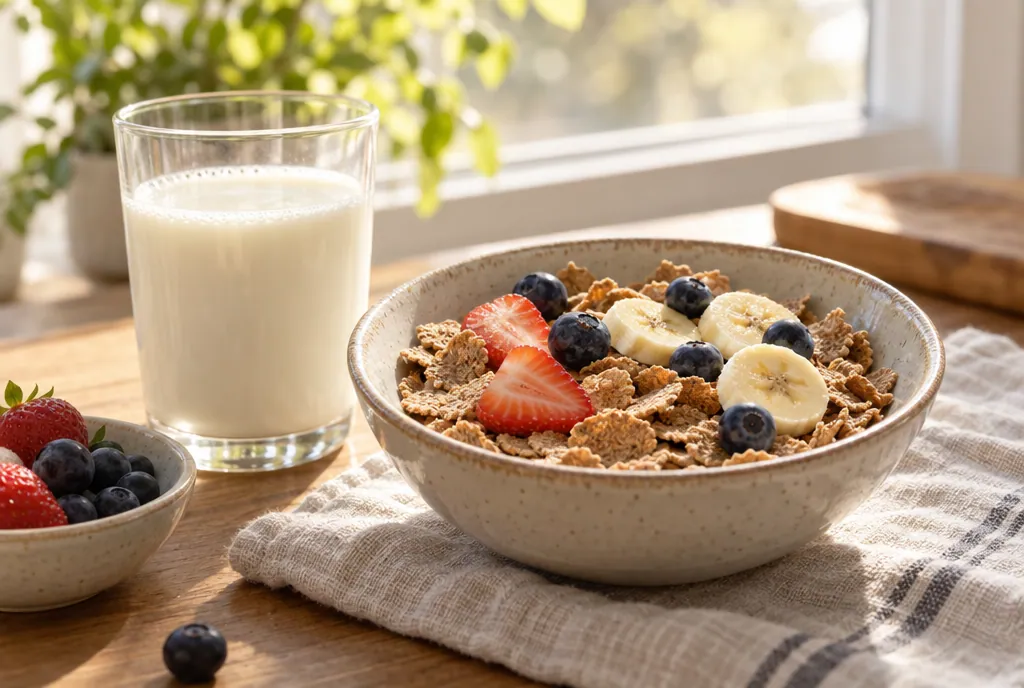
- Milk: almost all of the US milk supply is fortified with about 3 mcg (120 IU) of vitamin D per cup (ODS). Many plant-based alternatives such as soy, almond and oat milk are similarly fortified.
- Fortified foods: many breakfast cereals and some brands of orange juice, yogurt and margarine.
- Small amounts: beef liver, egg yolks and cheese.
- Mushrooms provide a little, and some have been exposed to ultraviolet light to raise their vitamin D content.
Because fortification varies by brand, the label is your best guide. Put salmon or trout on your weekly meal plan once or twice, and let fortified milk or cereal cover the everyday part.
What about sunlight?
Your body makes vitamin D when your bare skin is exposed to the sun, and most people get at least some vitamin D this way (ODS). But clouds, smog, older age and darker skin reduce how much your skin makes, and your skin does not make vitamin D from sunlight through a window. MedlinePlus adds that the amount made from sun exposure can vary greatly from person to person (MedlinePlus).
ODS also points out that ultraviolet radiation from sunshine can cause skin cancer, and health experts recommend sunscreen with an SPF of 15 or more when you’re out in the sun for more than a few minutes (ODS). Food is the part you can measure.
Fortified foods for different diets
Eat dairy
Milk, yogurt and cheese cover a lot of your calcium. Milk usually brings vitamin D too, but ODS says cheese and ice cream are usually not fortified (ODS). Check yogurt labels, since only some brands add vitamin D.
Lactose intolerant
ODS lists lactose-free or reduced-lactose dairy products as calcium options (ODS). MedlinePlus adds that most people without severe lactose intolerance can still digest hard cheeses and yogurt (MedlinePlus).
Plant-based
For people who don’t eat dairy, ODS lists canned fish with bones (if you eat fish), kale, broccoli, Chinese cabbage, and calcium-fortified fruit juices, soy and almond beverages, tofu and ready-to-eat cereals (ODS). Calcium is added only to some brands, so check each label.
How to read calcium and vitamin D on a label
The Nutrition Facts label must list the amount and %DV of vitamin D, calcium, iron and potassium (FDA). The Daily Values behind those percentages are 1,300 mg for calcium and 20 mcg for vitamin D (FDA).
FDA’s general guide: 5% DV or less of a nutrient per serving is considered low, and 20% DV or more is considered high (FDA).
Keep in mind that the Daily Value is one number for label use, while your own need depends on your age and life stage. Use %DV to compare two cartons side by side, and use the age table above to think about your whole day. For the rest of the panel, see how to read a nutrition label.
Calcium and vitamin D shopping checklist
- Find your age group in the table and note your daily amounts.
- Plan one or more calcium foods per meal, such as milk, yogurt, cheese, fortified soy beverage or tofu.
- Check the %DV for calcium and vitamin D on milk, plant beverages, juice, yogurt and cereal.
- Look for 20% DV or more per serving when you want a high source.
- Choose canned salmon or sardines with bones for calcium plus fish.
- Add fatty fish such as salmon, trout or mackerel to the week’s menu.
- Steam or sauté greens instead of boiling them.
- Ask your doctor or a registered dietitian before adding any supplement.
More nutrient guides live in the Nutrients Explained hub.
Frequently asked questions
Do cheese and ice cream have vitamin D?
Usually not much. ODS says foods made from milk, like cheese and ice cream, are usually not fortified, and that beef liver, egg yolks and cheese have small amounts of vitamin D (ODS). Cheese is still a good calcium source: MedlinePlus lists 1.5 ounces (45 grams) of cheese as about 300 mg of calcium (MedlinePlus).
Does low-fat milk have less calcium than whole milk?
No. MedlinePlus says removing the fat will not lower the amount of calcium in a dairy product (MedlinePlus). It also notes that whole milk is recommended for children ages 1 to 2, so ask your child's doctor which milk fits your toddler.
Can I get vitamin D from sun through a window?
No. ODS says your skin does not make vitamin D from sunlight through a window, and that clouds, smog, older age and darker skin reduce how much your skin makes (ODS). ODS also notes that sunlight can cause skin cancer, so food is the steadier place to look.
Should I take a calcium or vitamin D supplement?
That is a question for your doctor or a registered dietitian. ODS notes that people should get most of their nutrients from food and drinks, with fortified foods and supplements useful when needs can't be met that way (ODS). Supplements can also interact with some medicines, so bring a list of everything you take.