Protein: How Much You Need and Easy Ways to Get It
What the 2025–2030 Dietary Guidelines say about protein, the protein Daily Value, everyday animal and plant protein foods, and easy ways to add protein to meals.
Key takeaways
- The 2025–2030 Dietary Guidelines set a protein serving goal of 1.2–1.6 grams of protein per kilogram of body weight per day, adjusted to your calorie needs (Dietary Guidelines).
- The Daily Value for protein on food labels is 50g (FDA), but most labels only show a protein %DV when the package makes a protein claim (FDA).
- The Guidelines say to prioritize protein foods at every meal and to eat a variety from both animal and plant sources (Dietary Guidelines).
- You do not need to eat animal products to get all the protein you need (MedlinePlus).
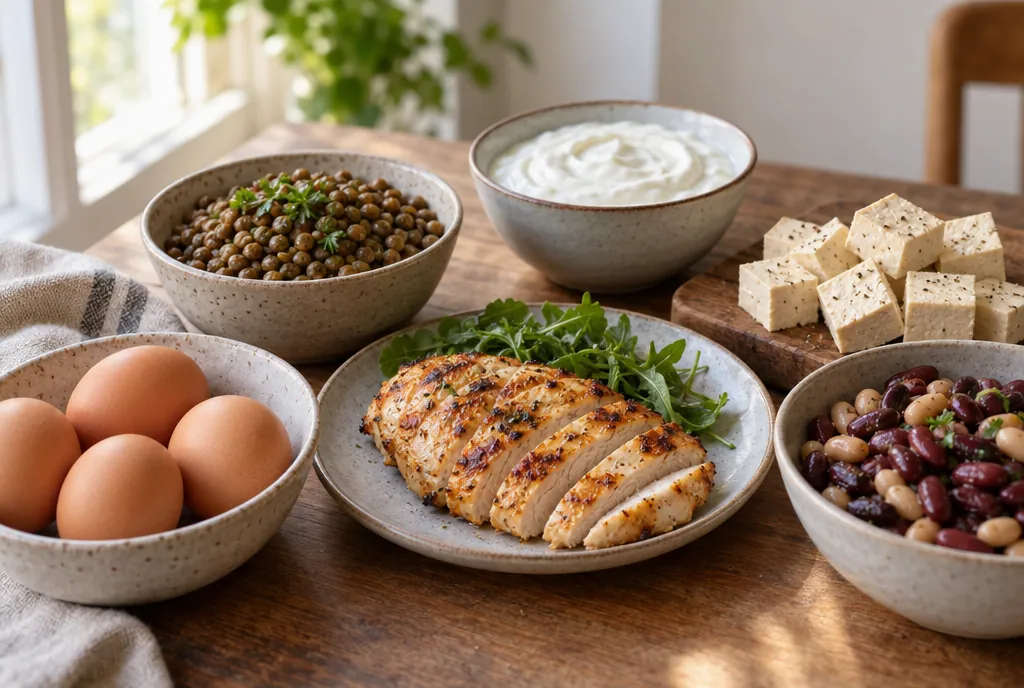
The quickest way to get enough protein is to put one protein food on your plate at every meal: eggs at breakfast, beans or chicken at lunch, fish or tofu at dinner. That is also the headline advice in the 2025–2030 Dietary Guidelines, which say to “prioritize protein foods at every meal” (Dietary Guidelines).
Below you’ll find the actual numbers, what counts as a protein food, and simple ways to fit more in without overhauling how you cook.
What protein does for you
Every cell in your body contains protein, and you need it in your diet to help your body repair cells and make new ones (MedlinePlus). It also matters for growth and development in children, teens and pregnant women.
When you digest protein, it breaks down into amino acids. Your body can make some of them, but essential amino acids must come from food (MedlinePlus). The good news: they don’t need to be eaten at every meal, because the balance over the whole day is more important (MedlinePlus).
How much protein you need
You’ll see three different numbers, and they answer different questions.
| Number | What it is | Source |
|---|---|---|
| 1.2–1.6 grams of protein per kilogram of body weight per day | The protein serving goal in the 2025–2030 Dietary Guidelines, “adjusting as needed based on your individual caloric requirements” | Dietary Guidelines |
| 10% to 35% of total calorie needs | The daily recommended intake range for healthy adults | MedlinePlus |
| 50g | The Daily Value for protein used on Nutrition Facts labels | FDA |
To use the Guidelines goal (Dietary Guidelines), convert your weight to kilograms by dividing pounds by 2.2, then multiply by 1.2 and by 1.6. For someone who weighs 150 pounds (about 68 kilograms), that works out to roughly 82 to 109 grams a day. Treat that as a starting range, not a target to hit to the gram.
The FDA’s 50g Daily Value (FDA) is a label reference, not a personal prescription. And FDA notes that “protein intake is not a public health concern” for adults and children over 4 in the United States (FDA), so most people don’t need to track protein closely.
What a serving looks like
MedlinePlus says 1 ounce (30 grams) of most protein-rich foods contains 7 grams of protein, and lists these as roughly 1 ounce: 1 oz of meat, fish or poultry; 1 large egg; ¼ cup tofu; or ½ cup cooked beans or lentils (MedlinePlus). That makes it easy to estimate a meal without a scale.
Everyday protein foods
The Guidelines recommend a variety of protein foods from animal sources, including eggs, poultry, seafood and red meat, plus plant-sourced protein foods such as beans, peas, lentils, legumes, nuts, seeds and soy (Dietary Guidelines). They also say to consume meat “with no or limited added sugars, refined carbohydrates or starches, or chemical additives” (Dietary Guidelines).
| Food group | Everyday examples | Notes |
|---|---|---|
| Poultry and meat | Skinless turkey or chicken, bison, lean beef or pork such as round, top sirloin or tenderloin | MedlinePlus suggests trimming visible fat (MedlinePlus) |
| Fish and shellfish | Salmon, sardines, trout, shrimp, pollock | Choose fish lower in mercury (FDA) |
| Eggs and dairy | Eggs, milk, yogurt, cheese | The Guidelines call dairy an excellent source of protein (Dietary Guidelines) |
| Beans, peas and lentils | Pinto, black, kidney and garbanzo beans, lentils, split peas | Also count as vegetables (NIA) |
| Nuts and seeds | Almonds, peanuts, peanut butter, walnuts, sunflower seeds | Nuts are high in fat, so watch portions (MedlinePlus) |
| Soy | Tofu, tempeh, other soy protein products | Listed by MedlinePlus as a good source (MedlinePlus) |
NIA notes that plant proteins tend to be lower in saturated fat, contain no cholesterol and provide fiber, but that plant-based meat alternatives can be heavily processed and high in sodium (NIA). Read the label on veggie burgers the same way you would on sausages. For more on fats in protein foods, see healthy fats explained.
Protein at every meal
Eat meat
You probably get plenty of protein at dinner already. Spread it out: eggs or yogurt at breakfast, leftover chicken or a tuna salad at lunch, and fish once or twice a week at dinner.
The Guidelines suggest swapping deep-fried cooking for baked, broiled, roasted, stir-fried or grilled methods (Dietary Guidelines). Sheet-pan chicken thighs or broiled salmon take about as much effort as frying with less cleanup.
Vegetarian
The Guidelines list dairy, eggs, beans, peas, lentils, legumes, nuts, seeds, tofu and tempeh as protein-rich foods for vegetarians (Dietary Guidelines). Greek yogurt with nuts, a cheese and bean quesadilla, or a lentil soup with an egg on the side all work.
NIA suggests counting beans and peas as protein foods if you’re vegetarian (NIA). The Guidelines also advise significantly limiting highly processed vegan or vegetarian foods that can include added fats, sugars and salt (Dietary Guidelines).
Vegan
You can meet your protein needs without animal products (MedlinePlus). Rotate beans, lentils, tofu, tempeh, nuts and seeds, and add whole grains such as quinoa.
The Guidelines say to diversify plant protein sources and note that vegan diets can fall short in several nutrients, including protein, iron, calcium and vitamin B12 (Dietary Guidelines). A registered dietitian can check whether your diet covers them.
Easy protein swaps
Small changes add up across a week. Try a few of these:
- Swap a plain bagel breakfast for eggs on whole-grain toast.
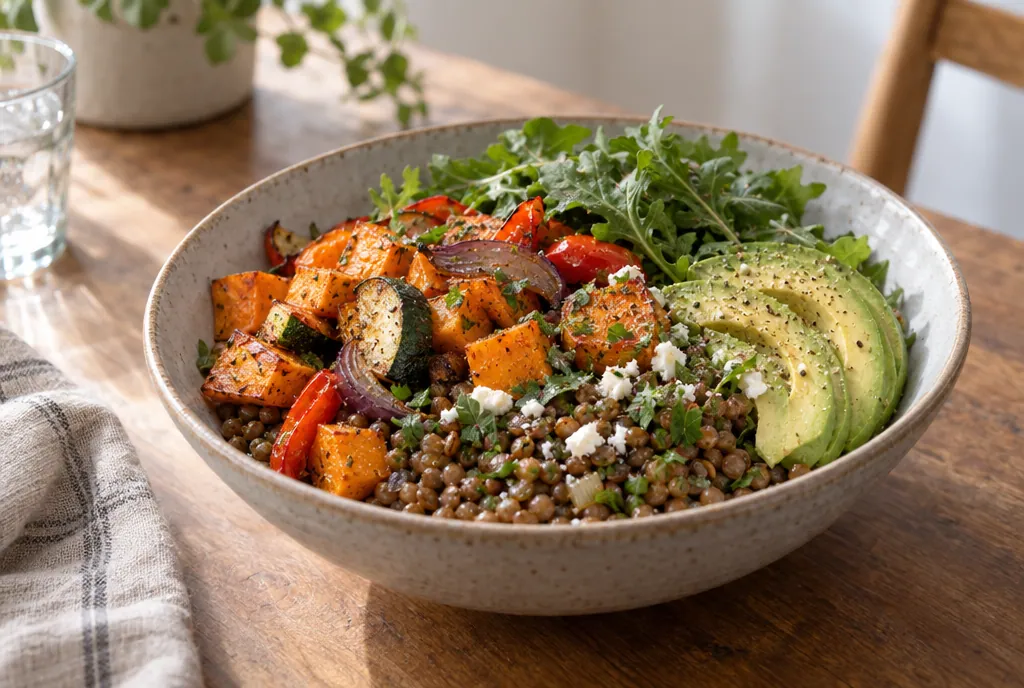
- Stir a half cup of beans or lentils into soup, chili or a grain bowl.
- Top salads with chickpeas, canned salmon or hard-boiled eggs instead of croutons.
- Snack on a small handful of nuts or a yogurt instead of chips.
- Add cubed tofu to a vegetable stir-fry.
For more plate ideas, see building a balanced plate, and use how to read a nutrition label to compare the grams of protein in similar packaged foods.
Fish: choose lower-mercury options
FDA and EPA advice for people who are pregnant or breastfeeding is to eat 2 to 3 servings a week from the “Best Choices” list, with 1 serving being 4 ounces (FDA). For children, FDA’s advice is 2 servings a week from the same list, with smaller serving sizes by age (FDA).
The 2025–2030 Guidelines name salmon, sardines and trout as low-mercury, omega-3-rich seafood for pregnant women (Dietary Guidelines). If you eat fish caught by family or friends, FDA says to check fish and shellfish advisories first (FDA).
Protein as you get older
The Guidelines say some older adults need fewer calories but still require equal or greater amounts of key nutrients, including protein, and suggest dairy, meats, seafood, eggs, legumes and whole plant foods (Dietary Guidelines). NIA adds that older adults should eat a variety of nutrient-dense proteins and choose lean meats and poultry (NIA).
If a smaller appetite makes big meals hard, add soft, easy protein foods such as eggs, yogurt, cottage cheese, canned fish or bean soups. Eating well as you get older has more practical ideas, and the Nutrients Explained hub covers related nutrients.
Your protein checklist
- Include one protein food at breakfast, lunch and dinner.
- Mix animal and plant proteins across the week.
- Choose meats without added sugars, refined starches or long additive lists.
- Bake, broil, roast, stir-fry or grill instead of deep-frying.
- Pick fish from the lower-mercury list if you’re pregnant, breastfeeding or feeding children.
- Check the sodium on plant-based meat alternatives.
- Ask your doctor or dietitian about protein if you have kidney disease or another health condition.
Frequently asked questions
Do I need to eat complete proteins at every meal?
No. MedlinePlus explains that essential amino acids must come from food but do not need to be eaten at every meal, because the balance over the whole day matters more (MedlinePlus). Eating a variety of protein foods across the day covers this.
Why doesn't my yogurt label show a %DV for protein?
FDA requires a protein %DV only when the package makes a protein claim, such as "high in protein," or when the food is meant for infants and children under 4 (FDA). Otherwise the label lists protein in grams only.
Do older adults need more protein?
The Dietary Guidelines say some older adults need fewer calories but still require equal or greater amounts of key nutrients, including protein (Dietary Guidelines). Ask your doctor or a registered dietitian what amount fits your health, appetite and medications.
Is a lot of protein bad for you?
For healthy adults, MedlinePlus gives a recommended range of 10% to 35% of total calorie needs from protein (MedlinePlus). If you have kidney disease, your needs may be different, so work with a dietitian or doctor (NIDDK).
Sources
- Dietary Guidelines for Americans, 2025–2030 — USDA and HHS
- Daily Value on the Nutrition and Supplement Facts Labels — FDA
- How to Understand and Use the Nutrition Facts Label — FDA
- Protein in diet — MedlinePlus
- Advice about Eating Fish — FDA
- Healthy Eating As You Age: Know Your Food Groups — National Institute on Aging
- Healthy Eating for Adults with Chronic Kidney Disease — NIDDK