Iron: Food Sources and How to Absorb More
Heme vs nonheme iron, how much iron you need by age and life stage, the best food sources, and easy vitamin C pairings that help your body absorb plant iron.
Key takeaways
- Iron comes in two forms: heme iron in meat, seafood and poultry, and nonheme iron in plant foods and iron-fortified products (ODS).
- Adult women 19–50 need 18 mg of iron a day, adult men 19–50 need 8 mg, and pregnant women and teens need 27 mg (ODS).
- Vegetarians who skip meat, poultry and seafood need almost twice as much iron, because nonheme iron isn't absorbed as well as heme iron (ODS).
- Eat plant iron with vitamin C foods like citrus, strawberries, sweet peppers, tomatoes and broccoli to absorb more (ODS).
- The iron Daily Value on food labels is 18 mg, and iron must be listed on the Nutrition Facts label (FDA).
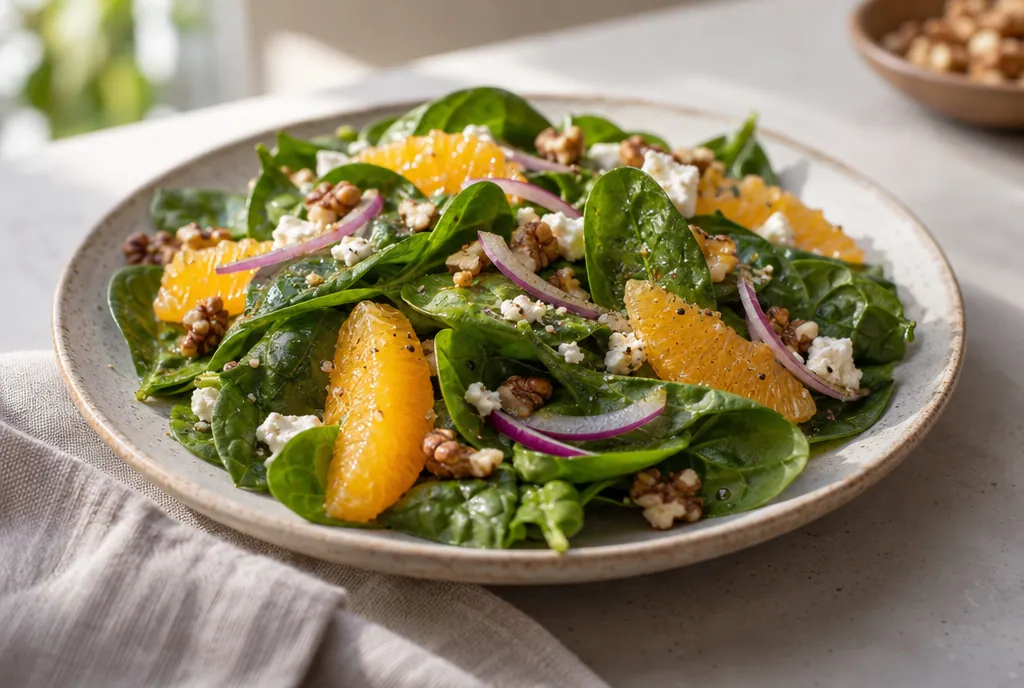
Pair your beans, lentils or spinach with a vitamin C food, and your body absorbs more of their iron (ODS). That one habit, plus knowing which foods carry which kind of iron, covers most of what you need to eat well for iron.
What iron does
Your body uses iron to make hemoglobin, the protein in red blood cells that carries oxygen from your lungs to the rest of your body (ODS). It also uses iron to make myoglobin, which supplies oxygen to muscles, and some hormones.
Your body can’t make iron, so it has to come from food (MedlinePlus). When iron stores run low over time, iron deficiency anemia can set in, and ODS lists weakness, tiredness, lack of energy and problems with concentration and memory among its symptoms (ODS). Those symptoms have many causes, so see your doctor rather than guessing.
Heme vs nonheme iron
Iron in food comes in two forms (ODS):
- Heme iron is found in meat, seafood and poultry. These foods have both heme and nonheme iron.
- Nonheme iron is found in plant foods and iron-fortified food products.
The difference matters for absorption. ODS explains that heme iron has better bioavailability than nonheme iron, and that what you eat alongside nonheme iron, such as vitamin C (ascorbic acid) or phytate, can significantly affect how much you absorb (ODS). It also notes that wheat and other flours are often fortified with iron, making bread, cereal and other grain products good sources of nonheme iron.
How much iron you need
Your need depends on your age, your sex, and whether you eat a mostly plant-based diet. These are the average daily recommended amounts from the ODS iron fact sheet.
| Life stage | Recommended amount (ODS) |
|---|---|
| Birth to 6 months | 0.27 mg |
| Infants 7–12 months | 11 mg |
| Children 1–3 years | 7 mg |
| Children 4–8 years | 10 mg |
| Children 9–13 years | 8 mg |
| Teen boys 14–18 years | 11 mg |
| Teen girls 14–18 years | 15 mg |
| Adult men 19–50 years | 8 mg |
| Adult women 19–50 years | 18 mg |
| Adults 51 years and older | 8 mg |
| Pregnant teens | 27 mg |
| Pregnant women | 27 mg |
| Breastfeeding teens | 10 mg |
| Breastfeeding women | 9 mg |
If you don’t eat meat, poultry or seafood, ODS says you need almost twice the amount listed, because your body doesn’t absorb nonheme iron from plant foods as well as heme iron from animal foods (ODS).
Food sources of iron
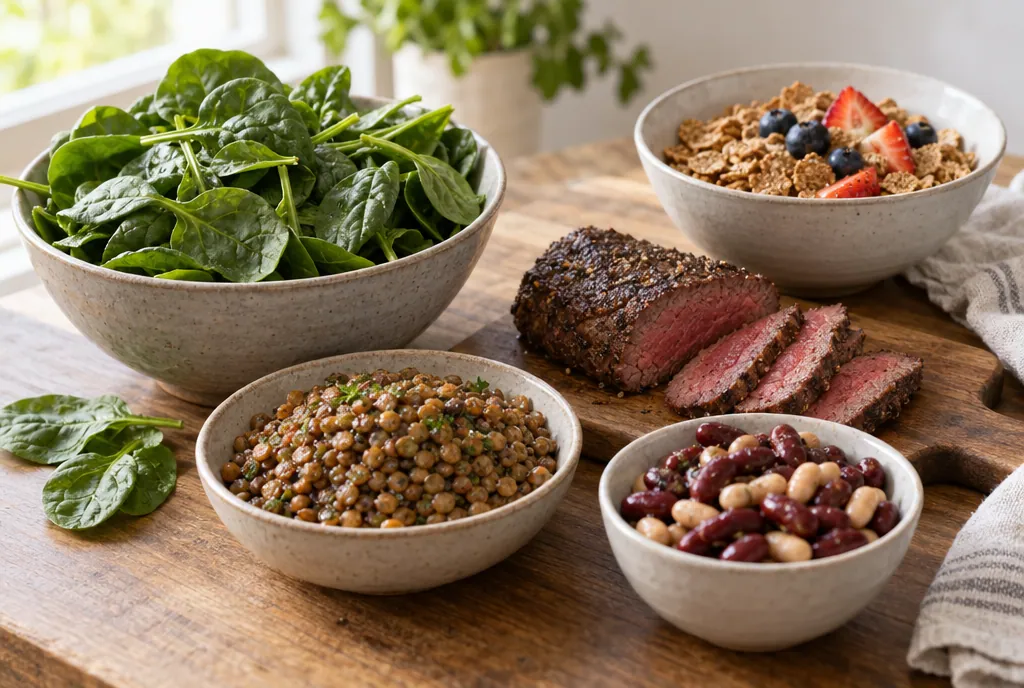
ODS says you can get recommended amounts by eating a variety of foods, including lean meat, seafood and poultry; iron-fortified breakfast cereals and breads; white beans, lentils, spinach, kidney beans and peas; and nuts and some dried fruits, such as raisins (ODS).
MedlinePlus gives a longer list, sorted here by the kind of iron each food carries (MedlinePlus):
| Food group | Examples from MedlinePlus | Type of iron |
|---|---|---|
| Meat | Lean red meat (especially beef), liver, lamb, pork | Heme and nonheme (ODS) |
| Poultry | Poultry, dark red meat | Heme and nonheme (ODS) |
| Seafood | Oysters, salmon, tuna, shellfish | Heme and nonheme (ODS) |
| Eggs | Eggs, especially egg yolks | Listed by MedlinePlus as a top source |
| Legumes | Lima beans, soybeans, kidney beans, dried beans and peas | Nonheme (ODS) |
| Vegetables | Spinach, kale, collards, broccoli, asparagus, dandelion greens | Nonheme (ODS) |
| Whole grains and fortified foods | Wheat, millet, oats, brown rice, iron-fortified cereals | Nonheme (ODS) |
| Nuts and dried fruit | Almonds, Brazil nuts, prunes, raisins, apricots | Nonheme (ODS) |
MedlinePlus also notes that milk is a very poor source of iron (MedlinePlus). Toddlers who drink large amounts of milk and skip other foods may develop what it calls “milk anemia,” and it gives 2 to 3 cups (480 to 720 milliliters) a day as the recommended milk intake for toddlers.
How to absorb more iron
These tips come straight from ODS and MedlinePlus. Pick the ones that fit how you already cook.
- Add vitamin C. Your body absorbs plant iron better when you eat it with foods that contain vitamin C, such as citrus fruits, strawberries, sweet peppers, tomatoes and broccoli (ODS). MedlinePlus adds potatoes to that list (MedlinePlus).
- Mix in a little meat, fish or poultry. MedlinePlus says mixing some lean meat, fish or poultry with beans or dark leafy greens at a meal can improve absorption of vegetable iron up to three times (MedlinePlus).
- Use a cast-iron skillet. Cooking in one can help increase the amount of iron your food provides (MedlinePlus).
- Watch the black tea. It contains substances that bind to dietary iron so your body can’t use it (MedlinePlus).
Eat meat and fish
Build meals around a modest portion of lean beef, chicken thighs, salmon or tuna, and add beans or greens on the side. A chili with beef, kidney beans and tomatoes combines heme iron, plant iron and vitamin C in one pot.
Vegetarian or vegan
Since you need almost twice the listed amount (ODS), lean on lentils, white beans, kidney beans, soybeans, iron-fortified cereal and bread, nuts and raisins. Put a vitamin C food on the same plate every time: peppers in a lentil salad, strawberries on fortified cereal, tomato sauce on white beans.
Feeding young kids
MedlinePlus says babies moving to solid foods should eat iron-rich foods, and children ages 1 to 4 grow fast and use up iron (MedlinePlus). Ask your child’s doctor which iron-fortified foods suit their age. For lunchbox ideas, see healthy school lunches and snacks.
Who may need more iron
ODS says most people in the United States get enough iron, but some groups are more likely to have trouble getting enough (ODS):
- Teen girls and women with heavy periods
- Pregnant women and teens
- Infants, especially if they are premature or low-birth weight
- Frequent blood donors
- People with cancer, gastrointestinal (GI) disorders or heart failure
MedlinePlus adds long-distance runners to its list of people at risk for low iron (MedlinePlus).
Reading iron on the label
Iron is one of four vitamins and minerals, along with vitamin D, calcium and potassium, whose amount and %DV must be listed on the Nutrition Facts label (FDA). The Daily Value for iron is 18 mg, and as a general guide, 5% DV or less per serving is considered low and 20% DV or more high (FDA).
Fortified cereals and breads are where this check pays off most, since iron levels vary by brand. Compare two boxes at the same serving size, then glance at added sugars too. For a full walk-through, see how to read a nutrition label, and for the calcium side of the panel, calcium and vitamin D.
Iron-smart meal checklist
- Find your life stage in the table and note your daily amount.
- If you’re vegetarian, plan for almost twice that amount.
- Include an iron food at most meals: beans, lentils, lean meat, fish, eggs or fortified cereal.
- Add a vitamin C food to plant-iron meals, such as peppers, tomatoes, citrus or strawberries.
- Check %DV for iron on cereal and bread labels; 20% DV or more is high.
- Have black tea between meals rather than with iron-rich ones.
- Cook greens and beans in a cast-iron skillet when it suits the dish.
- Talk to your doctor before taking any iron supplement.
More nutrient guides live in the Nutrients Explained hub.
Frequently asked questions
Is spinach a good source of iron?
Spinach contains nonheme iron, and ODS lists it alongside white beans, lentils, kidney beans and peas as iron foods (ODS). Plant iron is harder for your body to absorb, so MedlinePlus suggests mixing some lean meat, fish or poultry with beans or dark leafy greens, or adding vitamin C foods (MedlinePlus).
Does tea or coffee affect iron?
MedlinePlus says some foods reduce iron absorption, and gives black tea as an example: it contains substances that bind to dietary iron so the body can't use it (MedlinePlus). If you're working on your iron, you could have tea between meals rather than with an iron-rich meal. Ask your doctor if you're unsure.
Can you get too much iron from food?
ODS says the risk of iron overload from food is low for adults with normal intestinal function (ODS). People with hereditary hemochromatosis build up too much iron and should avoid iron and vitamin C supplements (ODS). If you have this condition, follow your doctor's diet advice.
Should I take an iron supplement?
Only if your doctor recommends one. Most people in the United States get enough iron, ODS says, high doses of iron supplements can cause an upset stomach, and iron supplements can interact with medicines such as levothyroxine (ODS). Accidental overdose of iron products is a leading cause of fatal poisoning in children under 6, so store any you have out of reach.