Leftovers: How Long They Keep and How to Reheat Safely
Refrigerate leftovers within 2 hours, eat them within 3 to 4 days and reheat to 165 °F. Here is how to cool, store, thaw and reheat leftovers the FSIS way.
Key takeaways
- Refrigerate leftovers within 2 hours of cooking, and throw away perishable food left at room temperature for more than 2 hours (1 hour if the temperature is over 90 °F).
- FSIS says leftovers can be kept in the refrigerator for 3 to 4 days or frozen for 3 to 4 months.
- When reheating, make sure leftovers reach 165 °F as measured with a food thermometer, and bring sauces, soups and gravies to a rolling boil.
- Microwaves have cold spots, so FSIS says to check the temperature of the food in several places with a food thermometer.
Good leftovers come down to three habits: get food into the fridge fast, eat it within a few days and reheat it until it is hot all the way through.
USDA’s Food Safety and Inspection Service (FSIS) puts it plainly: not cooking food to a safe temperature and leaving food out at an unsafe temperature are the two main causes of foodborne illness. Leftovers sit right at the point where both can go wrong.
Get leftovers into the fridge within 2 hours
The clock starts when the food comes off the heat. FSIS says bacteria grow rapidly between the temperatures of 40 °F and 140 °F, and its Danger Zone page adds that bacteria can be doubling in number in as little as 20 minutes in that range.
So the rule is short. Within 2 hours of cooking food or after it is removed from an appliance keeping it warm, leftovers must be refrigerated. On a hot day the window shrinks: FSIS says to throw away perishable food left at room temperature for more than 2 hours (1 hour if the temperature is over 90 °F, such as at an outdoor picnic during summer).
If you are serving food over a longer stretch, FSIS says hot food must be kept hot at 140 °F or warmer, and cold perishable food, such as chicken salad or a platter of deli meats, should be kept at 40 °F or below.
Cool it fast in shallow containers
A big pot of chili cools slowly in the middle, and that slow cooling is the problem. FSIS says to divide large amounts of food into shallow containers so food reaches 40 °F or below as fast as possible. Its Danger Zone page says leftovers must be put in shallow containers for quick cooling and refrigerated at 40 °F or below within two hours.
A few practical moves from the same FSIS page:
- Split soup or stew into several small containers instead of one big one.
- Slice whole roasts or hams into smaller parts before chilling.
- Cut a cooked turkey into smaller pieces: slice the breast meat, and leave legs and wings whole.
- You don’t need to wait for food to cool on the counter. FSIS says hot food can be placed directly in the refrigerator.
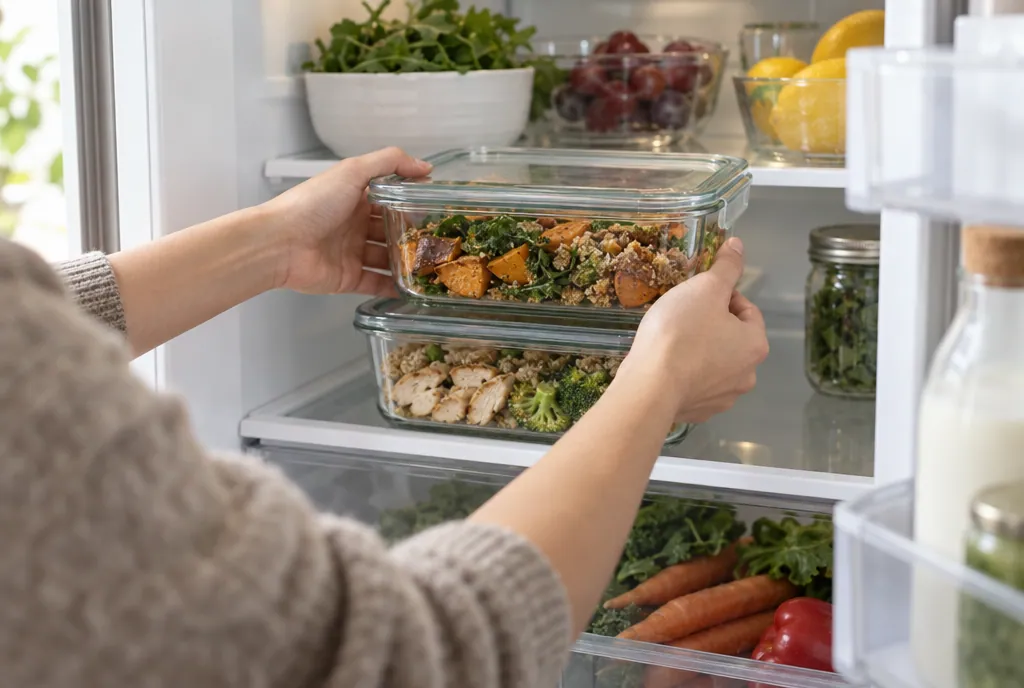
Then cover it. FSIS says to cover leftovers, wrap them in airtight packaging, or seal them in storage containers, which helps keep bacteria out, retain moisture and stop leftovers from picking up odors. If you cook in batches, our meal prep basics guide has ideas for portioning as you pack.
How long leftovers keep
The headline number: FSIS says leftovers can be kept in the refrigerator for 3 to 4 days or frozen for 3 to 4 months. It adds that frozen leftovers are safe indefinitely but can lose moisture and flavor when stored for longer times.
The refrigerator column below comes from the FSIS refrigeration storage chart, and the freezer column from the FSIS freezer storage chart (0 °F), which notes that freezer storage is for quality only.
| Leftover | Refrigerator | Freezer (quality) |
|---|---|---|
| Cooked meat, poultry and fish pieces; cooked casseroles | 3-4 days | Meat, cooked: 2 to 3 months; poultry, cooked: 4 months; casseroles: 2 to 3 months |
| Soups and stews | 3-4 days | 2 to 3 months |
| Gravy and broth | 3-4 days | Gravy, meat or poultry: 2 to 3 months |
| Patties and nuggets | 3-4 days | Not listed |
| Cooked egg dishes | 3-4 days | Not listed |
| Store-cooked dinners and entrees | 3-4 days | Not listed |
Label each container with the date you cooked it. On day four, if it is still there, it goes.
Thaw frozen leftovers safely
FSIS lists three safe ways to thaw leftovers: the refrigerator, cold water and the microwave oven.
- Refrigerator: slowest, but the food stays safe the whole time. FSIS says that after thawing, the food should be used within 3 to 4 days or can be refrozen.
- Cold water: faster, but the leftovers must be in a leak-proof package or plastic bag. Foods thawed this way should be cooked before refreezing.
- Microwave: fastest. FSIS says to continue to heat it until it reaches 165 °F as measured with a food thermometer.
Never leave them on the counter to thaw: FSIS says perishable foods should never be thawed on the counter, or in hot water.
Short on time? FSIS says it is safe to reheat frozen leftovers without thawing; it just takes longer. Our guide to thawing food safely covers each method in more detail, and freezer-friendly meals explains what to freeze in the first place.
Reheat leftovers to 165 °F
Whatever the method, the target is the same. FSIS says when reheating leftovers, be sure they reach 165 °F as measured with a food thermometer, and to reheat sauces, soups and gravies by bringing them to a rolling boil. Covering leftovers while reheating retains moisture and helps the food heat all the way through.
Microwave
Arrange the food evenly in a covered, microwave-safe glass or ceramic dish, and add a little liquid if needed. Use a microwave-safe cover and vent it so steam can escape. Rotate the food partway through so it heats evenly.
Then let it rest before you check. FSIS says that because microwaves have cold spots, check the temperature of the food in several places with a food thermometer and allow a resting time. Every spot you check should read 165 °F.
Stovetop
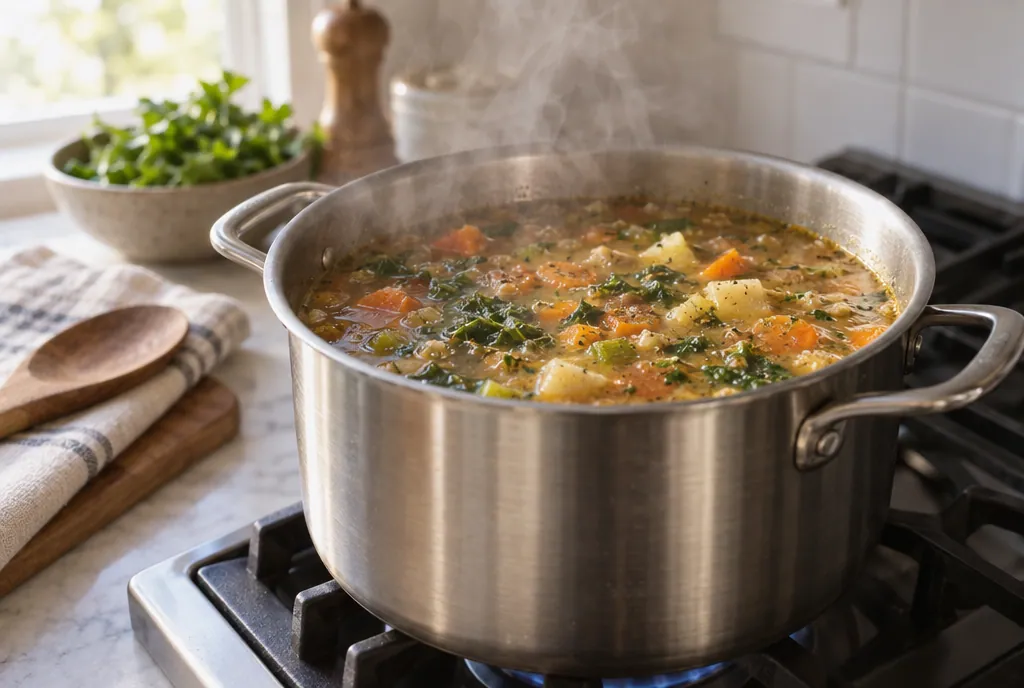
The stovetop suits soups, stews, sauces and gravies. FSIS says to reheat sauces, soups and gravies by bringing them to a rolling boil, so wait for steady, rolling bubbles across the pot, not just a few at the edge.
For thicker leftovers like a rice and vegetable stir-fry, cover the pan, stir often and check the thickest part with a thermometer for 165 °F.
Oven
The oven works well for casseroles and combination meals, including ones straight from the freezer. FSIS says it is safe to reheat frozen leftovers without thawing, for example casseroles in the oven, though it takes longer.
Cover the dish so it heats evenly and doesn’t dry out. Check the center, where it heats last, for 165 °F.
Refreezing leftovers
FSIS says it is safe to refreeze any food remaining after reheating previously frozen leftovers to the safe temperature of 165 °F. And if you thaw a big container in the fridge but only need some, you can take out your portion and refreeze the rest without reheating it.
Leftovers checklist
- Refrigerate leftovers within 2 hours (1 hour on a day above 90 °F)
- Divide large batches into shallow containers
- Cover, wrap or seal every container
- Write the date on the lid
- Eat or freeze refrigerated leftovers within 3 to 4 days
- Thaw frozen leftovers in the fridge, in cold water or in the microwave, never on the counter
- Reheat to 165 °F and check several spots with a food thermometer
- Bring soups, sauces and gravies to a rolling boil
- When in doubt, throw it out
Packing leftovers for tomorrow’s lunch? See packed lunch food safety. For more on keeping food safe at home, browse Food Safety at Home.
Frequently asked questions
Can I put hot food straight into the fridge?
Yes. FSIS says hot food can be placed directly in the refrigerator or be rapidly chilled in an ice or cold water bath before refrigerating. Divide big batches into shallow containers so they cool quickly, rather than leaving a full pot on the stove to cool.
Can I reheat frozen leftovers without thawing them?
Yes. FSIS says it is safe to reheat frozen leftovers without thawing, in a saucepan or microwave for soups and stews, or in the oven or microwave for casseroles and combination meals. It takes longer than reheating thawed food, so check that the food reaches 165 °F.
Can I refreeze leftovers after reheating them?
FSIS says it is safe to refreeze any food remaining after reheating previously frozen leftovers to 165 °F. If you thaw a large container in the refrigerator and only need part of it, you can refreeze the rest without reheating it.
How long can leftovers sit out on the counter?
FSIS says to throw away all perishable foods that have been left in room temperature for more than 2 hours (1 hour if the temperature is over 90 °F). Bacteria grow fastest between 40 °F and 140 °F, which is why the clock starts as soon as food leaves the heat.
Sources
- Leftovers and Food Safety — USDA Food Safety and Inspection Service
- Danger Zone (40°F - 140°F) — USDA Food Safety and Inspection Service
- Refrigeration & Food Safety — USDA Food Safety and Inspection Service
- Freezing and Food Safety — USDA Food Safety and Inspection Service
- People at Risk of Foodborne Illness — U.S. Food and Drug Administration
- The Big Thaw — Safe Defrosting Methods — USDA Food Safety and Inspection Service