Freezer-Friendly Meals: What Freezes Well and How to Store It
Learn which foods freeze well and which don't, how to package and label portions, and how to thaw and reheat freezer meals safely, using USDA guidance.
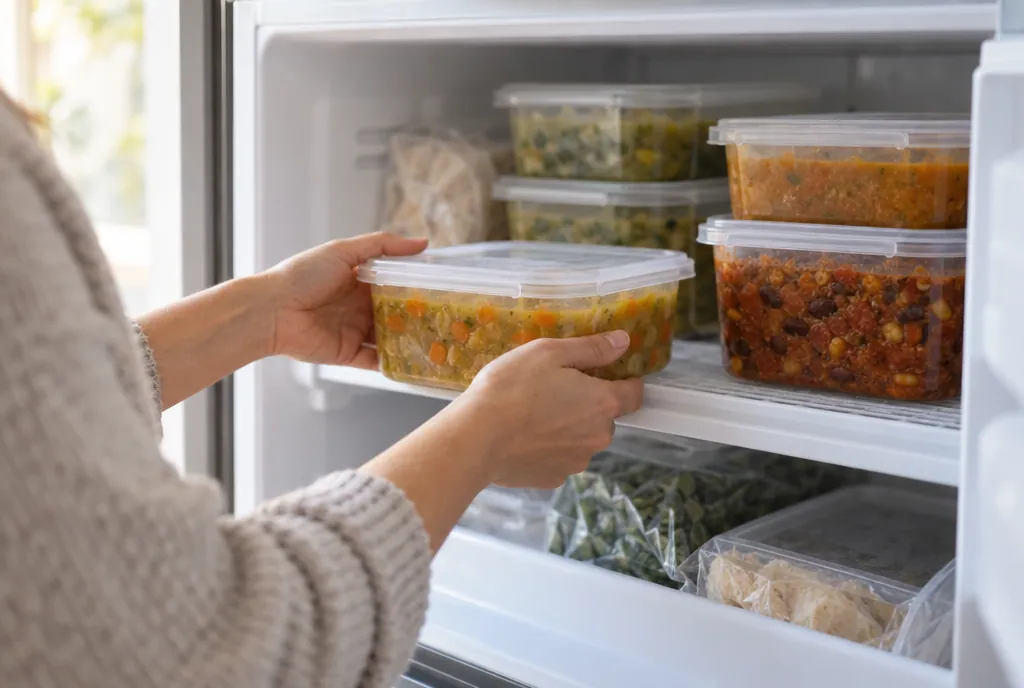
Key takeaways
- Food stored constantly at 0 degrees F will always be safe; FSIS says only the quality suffers with lengthy freezer storage.
- FSIS says you can freeze almost any food, but some foods simply don't freeze well, such as mayonnaise, cream sauce and lettuce.
- Leftovers can be frozen for 3 to 4 months; they stay safe longer but can lose moisture and flavor, so label each portion with the date.
- There are three safe ways to thaw food: in the refrigerator, in cold water, or in the microwave, and reheated leftovers should reach 165 degrees F.
A freezer turns one cooking session into several future dinners. The trick is knowing what holds up after thawing, how to pack it, and how to bring it back to the table safely.
Why the freezer works
Food stored constantly at 0 degrees F will always be safe, and only the quality suffers with lengthy freezer storage, according to the USDA Food Safety and Inspection Service (FSIS). Freezing keeps food safe by slowing the movement of molecules, which sends microbes into a dormant stage.
That is not the same as killing them. FSIS says freezing to 0 degrees F inactivates microbes in food, but once thawed they can become active again, so thawed food should be handled like any perishable food.
Safety and quality are two different questions. If your freezer has held 0 degrees F, frozen foods remain safe indefinitely, so a forgotten container at the back is a quality question (dry or bland), not a safety one. Our meal prep basics guide shows how freezing fits into a weekly cooking session.
What freezes well, and what doesn’t
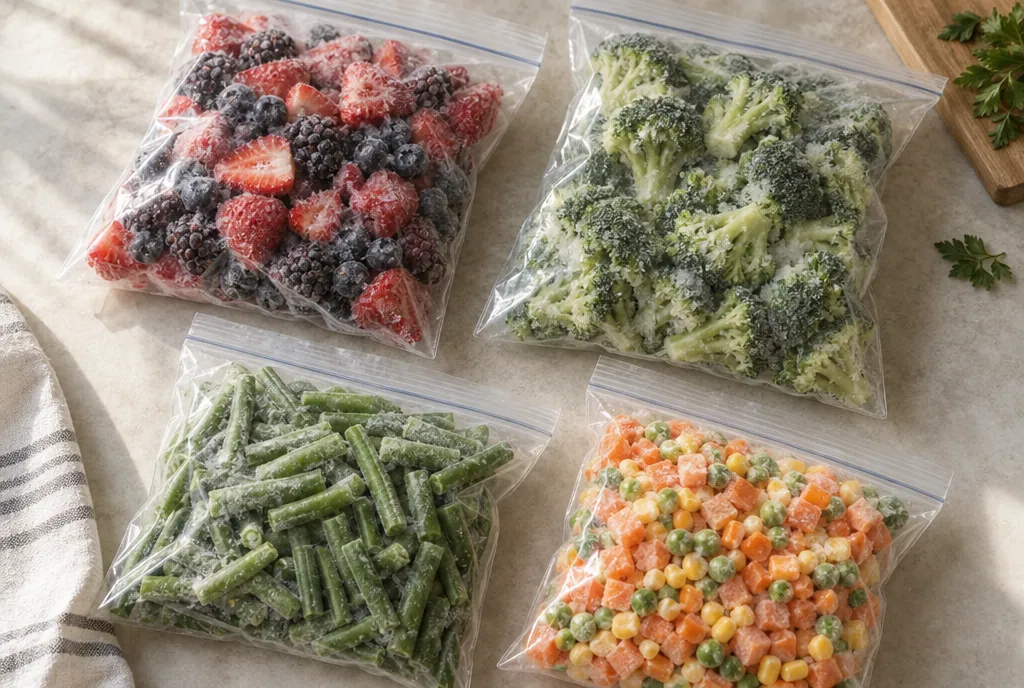
FSIS says you can freeze almost any food, with exceptions such as canned food or eggs in shells. Once food, such as a ham, is out of the can, you may freeze it. The same page notes that being able to freeze food and being pleased with its quality after defrosting are two different things.
The table below uses only what the FSIS freezing page says.
| Food | What FSIS says | Tip |
|---|---|---|
| Cooked meat, poultry, casseroles | Can be cooked or reheated from the frozen state | Plan about one and a half times the cooking time |
| Most vegetables that freeze well | Low acid, so they need brief, partial cooking (“blanching”) first | Blanch in boiling water or a microwave, then chill quickly before freezing |
| Fruits | Acids in frozen fruits neutralize enzyme activity | Freeze at peak quality |
| Mayonnaise, cream sauce, lettuce | Named as foods that simply don’t freeze well; emulsions such as mayonnaise or cream can separate and look curdled | Keep out of freezer meals, or add after thawing |
| Canned food, eggs in shells | Named as exceptions to “freeze almost any food”; shell eggs should not be frozen | Food out of the can, such as a ham, may be frozen |
| Raw meat and poultry | Keep their quality longer than cooked, because cooking loses moisture | Freeze extra raw portions as well as cooked ones |
For freezer-friendly dinners, soups, stews and casseroles are easy places to start, and all three appear on the FSIS freezer storage chart. Chili, cooked beans and cooked grains are other common batch-cook choices; since they aren’t on the chart, judge their quality after thawing as described below.
How long to keep it
Freezer times are for quality, not safety. The FSIS freezer storage chart for 0 degrees F lists these recommended times for best quality:
| Food | Months in the freezer |
|---|---|
| Casseroles | 2 to 3 |
| Frozen dinners and entrees | 3 to 4 |
| Soups and stews | 2 to 3 |
| Gravy, meat or poultry | 2 to 3 |
| Meat, cooked | 2 to 3 |
| Poultry, cooked | 4 |
For general leftovers, FSIS says they can be kept in the refrigerator for 3 to 4 days or frozen for 3 to 4 months. If a food isn’t on the chart, FSIS says to check the odor after thawing, because some foods develop a rancid or off odor when frozen too long and should be discarded.
Package, portion and label
Good packaging prevents freezer burn and makes meals easy to grab.
Package for the freezer
FSIS says proper packaging helps maintain quality and prevent freezer burn. It is safe to freeze meat or poultry in its original packaging, but that wrap is permeable to air, so for prolonged storage FSIS says to overwrap it. If a package tears in the freezer, the food is still safe to use; just overwrap or rewrap it.
For your own cooked meals, wrap tightly or use airtight containers and press out the air from freezer bags. FSIS says to cover leftovers, wrap them in airtight packaging, or seal them in storage containers.
Cool, then freeze fast
Divide large batches into shallow containers so they cool quickly. Then freeze quickly, because FSIS says rapid freezing prevents large ice crystals from forming. It also advises to never stack packages to be frozen; spread them in one layer and stack them only after frozen solid. FSIS adds that, ideally, a food 2 inches thick should freeze completely in about 2 hours, so thin, flat portions are easier to freeze fast.
Portion and label
Freeze in the amounts you’ll actually eat: one lunch, one dinner for two, or a family-sized casserole. Smaller portions thaw faster and avoid leftover leftovers. Write the dish, the date frozen and any reheating notes on each package.
Thaw and reheat safely
The three safe methods, from the freezing and leftovers pages:
- Refrigerator: FSIS says it takes the longest, but leftovers stay safe the entire time. After thawing, use the food within 3 to 4 days or refreeze it.
- Cold water: Use a leak-proof plastic bag, check that the water stays cold, and change it every 30 minutes. Cook immediately after thawing.
- Microwave: The fastest method. Cook the food immediately after thawing, because some areas may become warm and begin to cook.
You can also skip thawing. FSIS says it is safe to reheat frozen leftovers without thawing, in a saucepan or microwave for soup or stew, or in the oven or microwave for casseroles. When reheating, make sure leftovers reach 165 degrees F as measured with a food thermometer, and bring sauces, soups and gravies to a rolling boil.
For a full prep-and-reheat routine, see meal prep basics. For lunches built from freezer batches, see healthy work lunches, and for planning around what you already have, see the weekly meal plan guide.
Refreezing
FSIS says that once food is thawed in the refrigerator, it is safe to refreeze without cooking, although quality may drop. Foods thawed by the cold water method should be cooked before refreezing, and microwave-thawed leftovers can be refrozen after heating to 165 degrees F.
Freezer meal checklist
- Cook food to a safe temperature, then divide it into shallow containers.
- Chill and freeze portions promptly instead of waiting until the end of the fridge life.
- Skip or add later: mayonnaise, cream sauce and lettuce.
- Package in airtight containers or freezer bags with the air pressed out.
- Label each package with the dish, the date and reheating notes.
- Lay packages flat in one layer, and stack once they’re frozen solid.
- Keep an appliance thermometer in the freezer and check that it reads 0 degrees F or below.
- Thaw in the refrigerator, in cold water or in the microwave, never on the counter.
- Reheat to 165 degrees F and check with a food thermometer.
Frequently asked questions
Is freezer-burned food safe to eat?
Yes. FSIS says freezer burn does not make food unsafe, merely dry in spots. It appears as grayish-brown leathery spots caused by air touching the food. Cut the affected portions away before or after cooking; heavily freezer-burned food may need to be discarded for quality reasons.
Can I refreeze food that has thawed?
It depends how it thawed. FSIS says food thawed in the refrigerator is safe to refreeze without cooking, though quality may drop. Do not refreeze food left outside the refrigerator longer than 2 hours, or 1 hour above 90 degrees F.
Can I cook meals straight from the freezer?
Often yes. FSIS says raw or cooked meat, poultry or casseroles can be cooked or reheated from frozen, taking about one and a half times as long. Read the label on USDA-inspected frozen meat and poultry products, since some, such as pre-stuffed whole birds, must be cooked from the frozen state.
What if the power goes out and my freezer thaws?
Keep the door shut. FSIS says a full freezer will usually keep about 2 days, a half-full one about a day. When power returns, food that still has ice crystals or is as cold as 40 degrees F is safe to refreeze or use. Discard foods warmer than 40 degrees F for more than 2 hours. An appliance thermometer helps you check.