Packed Lunch Food Safety
Keep packed lunches safe with an insulated bag, two cold sources and a hot-food container. Here is what FSIS says needs a cold pack and what to toss after lunch.
Key takeaways
- FSIS says insulated, soft-sided lunch boxes or bags are best, but pack at least two ice sources with perishable food in any type of lunch bag or box you use.
- Food should not be left out at room temperature more than 2 hours — 1 hour if the temperature is above 90 degrees F.
- Keep soup, chili and stew in a closed insulated container until lunchtime to keep it hot — 140 degrees F (60 degrees C) or above.
- After lunch, discard all leftover food, used food packaging, and paper bags.
A packed lunch spends hours away from a fridge, often in a warm bag, car or locker. Two frozen cold packs, an insulated bag and a few habits at home are what keep it safe until noon.
USDA’s Food Safety and Inspection Service (FSIS) explains why the cold matters: harmful bacteria multiply rapidly in the “Danger Zone” — the temperatures between 40 and 140 degrees F, so perishable food carried without an ice source won’t stay safe long. Its Danger Zone page adds that bacteria can be doubling in number in as little as 20 minutes in that range.
The time limit: 2 hours, or 1 hour in the heat
The rule for any perishable food is the same in a lunch bag as on a buffet. FSIS says food should not be left out at room temperature more than 2 hours — 1 hour if the temperature is above 90 degrees F (32.2 degrees C).
That clock covers the whole trip. FSIS says perishable food must be kept cold while commuting via bus, bicycle, on foot, in a car, or on the subway, and kept cold after you arrive until lunchtime. A bag that sits in a hot car or a sunny window loses its cold faster.
Pack it cold: insulated bag plus two cold sources
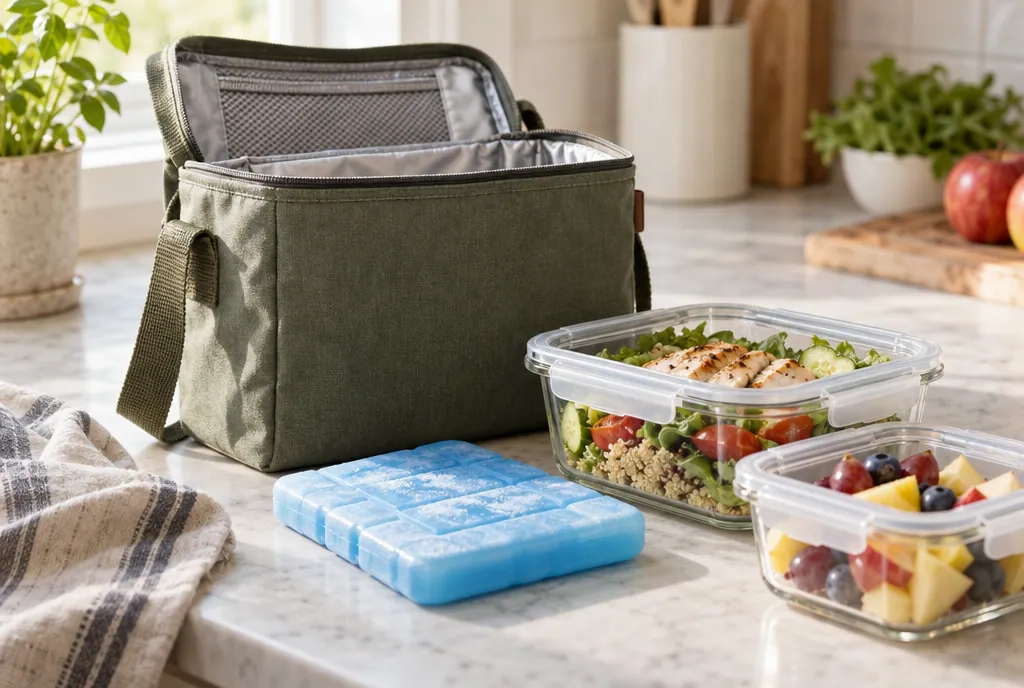
FSIS says insulated, soft-sided lunch boxes or bags are best for keeping food cold. Whatever bag you use, the cold sources do the real work.
FSIS recommends at least two cold sources. Your options:
- Two frozen gel packs, each not smaller than 5x3 inches.
- One frozen gel pack plus a frozen juice box.
- One frozen gel pack plus a frozen bottle of water.
Freeze gel packs overnight. When you pack, FSIS says to place them on top and bottom of the perishable food items, so the food is sandwiched between them.
Start cold at home
A cold pack keeps cold food cold; it can’t chill warm food. FSIS says to prepare cooked foods such as turkey, ham, chicken, and vegetable or pasta salads ahead of time so they chill thoroughly in the refrigerator, at 40 degrees F (4.4 degrees C) or below. Divide large amounts into shallow containers for fast chilling.
It’s fine to cook the night before, but FSIS says to pack lunch bags right before leaving home. Freezing a sandwich also helps it stay cold; for best quality, add mayonnaise, lettuce or tomatoes later rather than freezing them. If you batch-cook for the week, our meal prep basics guide covers portioning and storage.
What needs a cold pack
The lists below come from the FSIS bag lunch page.
| Needs a cold source | Safe without a cold source |
|---|---|
| Meat, poultry and eggs | Whole fruits and vegetables |
| Luncheon meats | Hard cheese |
| Cheese and cut fruit in prepackaged lunch combos | Canned meat and fish |
| Cooked turkey, ham and chicken | Chips, breads and crackers |
| Vegetable or pasta salads | Peanut butter and jelly |
| Mustard and pickles |
Note the combos. FSIS says prepackaged lunch combos often contain perishable foods such as luncheon meats, cheese and cut fruit that must be kept refrigerated, even though they may be cured or contain preservatives.
For lunch ideas built around these foods, see healthy work lunches.
Keep hot food hot
For soup, chili or stew, use an insulated container and prime it first. FSIS says to fill the container with boiling water, let stand for a few minutes, empty, and then put in the piping hot food.
Then leave it shut. FSIS says to keep the insulated container closed until lunchtime to keep the food hot — 140 degrees F (60 degrees C) or above.
Reheating at work instead? FSIS says to cover food in the microwave and reheat leftovers to at least 165 degrees F (73.9 degrees C), using a food thermometer to check. Cook frozen convenience meals according to the package instructions. Our leftovers guide covers how long last night’s dinner keeps before it goes in the bag.
Clean hands, clean boards
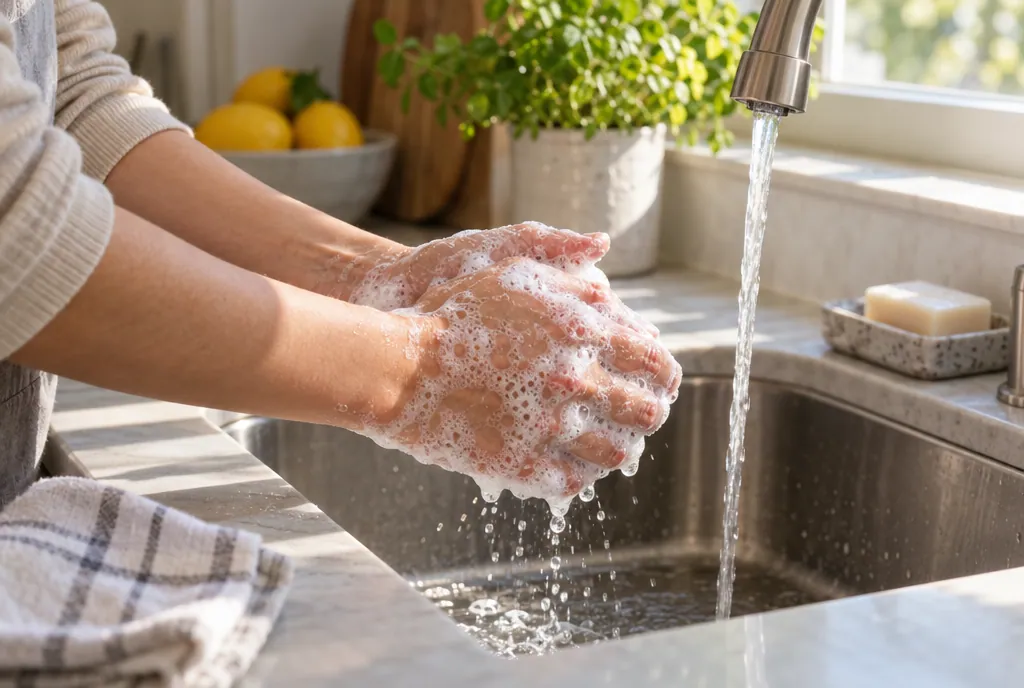
Packing starts with washing up. FSIS says to wash your hands with soap and warm water for 20 seconds before you start packing lunches. CDC lists before, during, and after preparing food, and before and after eating food among the key times to wash, and says to scrub your hands for at least 20 seconds. At work or school, wash before you eat. If soap and water are not handy, CDC says you can use a hand sanitizer that contains at least 60% alcohol.
In the kitchen, FSIS says to wash cutting boards, dishes, utensils, and countertops with hot, soapy water after preparing each food item. If you cut raw meat or poultry, wash the board before using it for bread, lettuce or tomatoes, or keep separate boards for produce and for meat.
After lunch: what to throw away
FSIS keeps this simple: pack just the amount of perishable food that can be eaten at lunchtime. Then there is nothing left to worry about.
Adults at work
- Put the bag in the work fridge as soon as you arrive. FSIS says that if you place an insulated bag in the refrigerator, leave the lid or bag open so that cold air can keep the food cold.
- No fridge? Count on your two cold sources and keep the bag out of sun and heat.
- If you reheat in a shared microwave, cover the food and check it with a thermometer.
- Wash your hands before eating, especially after a commute.
Kids at school
- Pack the bag right before school with two frozen cold sources; a frozen juice box can count as one.
- Ask whether the school has a fridge for lunches; if not, the cold packs do all the work.
- Pack only what your child will eat, and tell them to throw away leftovers and used packaging instead of bringing them home.
- Practice handwashing at home: CDC suggests humming the “Happy Birthday” song twice as a 20-second timer.
For lunchbox ideas, see healthy school lunches and snacks.
Packed lunch checklist
- Chill cooked food in the fridge the night before
- Wash hands for 20 seconds before packing
- Use an insulated bag with at least two frozen cold sources, top and bottom
- Pack the bag right before leaving home
- Preheat a food jar with boiling water before adding hot food
- Put the bag in a fridge on arrival, lid open, if one is available
- Eat within the 2-hour limit (1 hour above 90 °F) if the food is not kept cold
- Throw away leftovers and used packaging after lunch
More on keeping food safe is in Food Safety at Home.
Frequently asked questions
Is one ice pack enough for a lunch bag?
FSIS says to include at least two cold sources, such as two frozen gel packs (not smaller than 5x3-inches each), or a frozen gel pack plus a frozen juice box or frozen bottle of water. Place them on the top and bottom of the perishable food.
Can I make lunch the night before?
Yes. FSIS says it's fine to prepare the food the night before, but pack lunch bags right before leaving home. Keep cooked food in the refrigerator until you leave. Freezing sandwiches helps them stay cold, though FSIS says not to freeze sandwiches with mayonnaise, lettuce or tomatoes, for quality.
Should I put my lunch bag in the office fridge?
If there is one, yes. FSIS says to store perishable items there upon arrival, and if you put an insulated bag in the refrigerator, leave the lid or bag open so cold air can keep the food cold.
What temperature should I reheat lunch leftovers to?
FSIS says to reheat leftovers to at least 165 degrees F (73.9 degrees C) and to use a food thermometer to be sure that temperature is reached before eating. Cover the food in the microwave to hold in moisture and help it heat evenly.