How to Thaw Food Safely: Fridge, Cold Water and Microwave
FSIS lists three safe ways to thaw food: the fridge, cold water and the microwave. Here are the times, when to cook and when you can refreeze for each.
Key takeaways
- FSIS says there are three safe ways to thaw food: in the refrigerator, in cold water, and in the microwave, and it is safe to cook foods from the frozen state.
- Plan ahead for the fridge: even a pound of ground meat or boneless chicken breasts requires a full day to thaw, and a turkey needs at least a day (24 hours) for every 5 pounds.
- For cold water, change the water every 30 minutes; food thawed in cold water or the microwave should be cooked immediately and cooked before refreezing.
- Perishable foods should never be thawed on the counter, or in hot water.
Pick your thawing method by how much time you have. The fridge needs a day or more, cold water takes hours, and the microwave takes minutes but commits you to cooking right away. If none of those fit, you can cook the food from frozen.
Frozen food is safe while it stays frozen. USDA’s Food Safety and Inspection Service (FSIS) says raw or cooked meat, poultry and egg products are safe indefinitely while frozen, but as soon as they begin to thaw and become warmer than 40 °F, bacteria that may have been present before freezing can begin to multiply. The goal of safe thawing is to keep food out of that range until you cook it.
Why the counter and hot water are out
It is tempting to leave a package on the counter all day or run it under hot water. FSIS says neither is safe: perishable foods should never be thawed on the counter, or in hot water and must not be left at room temperature for more than two hours.
The reason is the outside of the food. FSIS explains that even while the center of the package is still frozen, the outer layer of the food could be in the “Danger Zone,” between 40 and 140 °F — temperatures where bacteria multiply rapidly.
FSIS also lists places to avoid: never thaw foods in a garage, basement, car, dishwasher or plastic garbage bag; out on the kitchen counter, outdoors or on the porch.
The three safe methods at a glance
FSIS says there are three safe ways to thaw food: in the refrigerator, in cold water, and in the microwave. Here is how they compare.
Every entry in this table comes from the FSIS Big Thaw page.
| Refrigerator | Cold water | Microwave | |
|---|---|---|---|
| How long | A pound of ground meat or boneless chicken breasts: a full day. Turkey: at least a day (24 hours) for every 5 pounds | About a pound: an hour or less. A 3-to 4-pound package: 2 to 3 hours. Whole turkey: about 30 minutes per pound | No set time given; some areas may become warm and begin to cook |
| When to cook | Ground meat, stew meat, poultry, seafood: an additional day or two. Red meat cuts: 3 to 5 days | Immediately, if thawed completely | Immediately after thawing |
| Refreeze? | Yes, without cooking, though there may be some loss of quality | Cook before refreezing | Cook before refreezing |
How to use each method
Refrigerator
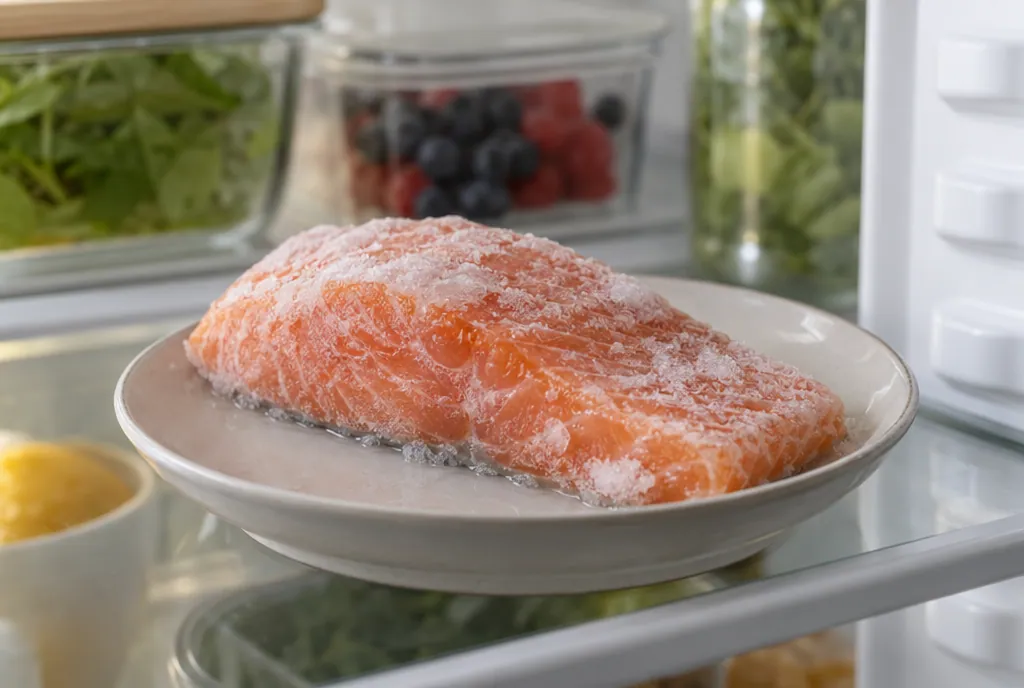
This is the slowest method and the one FSIS prefers. It says it’s best to plan ahead and thaw in the refrigerator where it will remain at a safe, constant temperature — at 40 °F or below.
- Move the food from the freezer to the fridge the day before, or earlier for a large item.
- Set it on a plate or in a container on a low shelf so any juices can’t drip onto other food.
- Expect the timing to vary. FSIS notes that some areas of the fridge may keep food colder than others, and food will take longer to thaw in a refrigerator set at 35 °F than one set at 40 °F.
Cold water
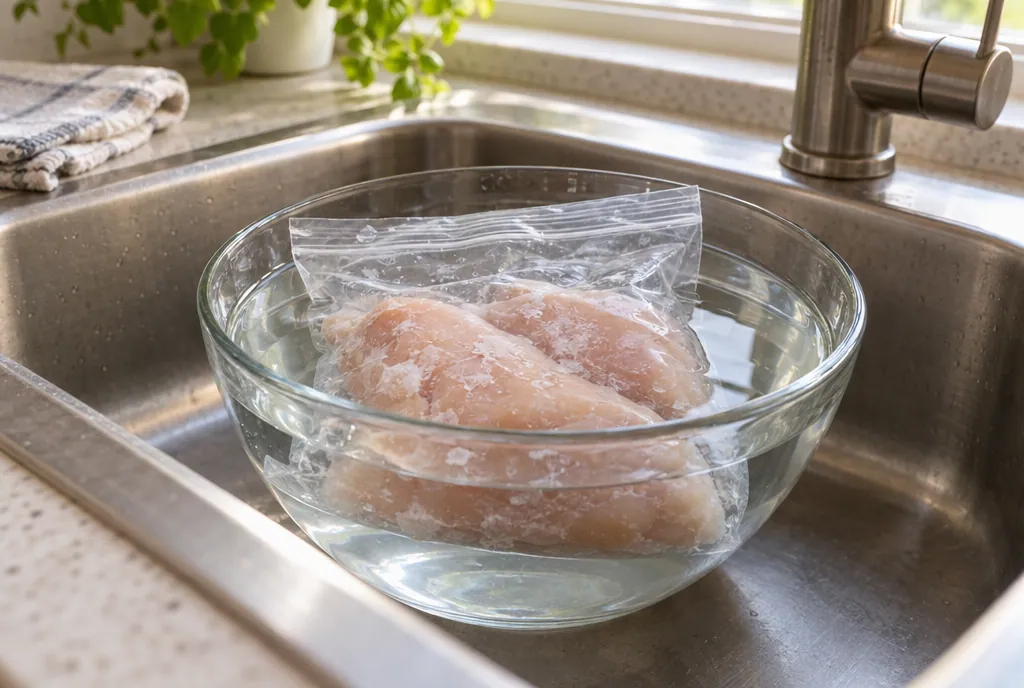
Faster than the fridge, but you have to stay nearby. FSIS says the food must be in a leak-proof package or plastic bag. A leaky bag can let bacteria in, and the meat may absorb water and turn watery.
- Seal the food in a leak-proof bag.
- Submerge the bag in cold tap water.
- Change the water every 30 minutes so it continues to thaw.
- Cook the food as soon as it has thawed completely.
Microwave
The microwave is quick, but it starts the cooking. FSIS says to plan to cook it immediately after thawing because some areas of the food may become warm and begin to cook during the thawing process.
- Thaw only what you are ready to cook now.
- Cook right away, in the microwave, oven or on the grill. FSIS says holding partially cooked food is not recommended because any bacteria present wouldn’t have been destroyed.
Cooking straight from frozen
Forgot to plan? You can skip thawing. FSIS says it is safe to cook foods from the frozen state. The cooking will take approximately 50% longer than the recommended time for fully thawed or fresh meat and poultry.
A few details from the FSIS freezing page:
- Raw or cooked meat, poultry or casseroles can be cooked or reheated from frozen.
- Discard any wrapping or absorbent paper from meat or poultry before cooking.
- For a whole frozen bird, remove the giblet pack from the cavity as soon as you can loosen it, and cook the giblets separately.
- Some products, such as pre-stuffed whole birds, MUST be cooked from the frozen state to ensure a safely cooked product. Read the package label.
Frozen leftovers work the same way. FSIS says it is safe to reheat frozen leftovers without thawing, and our leftovers guide covers reheating to a safe temperature.
Refreezing: what’s allowed
Whether you can put thawed food back in the freezer depends on how you thawed it.
- Thawed in the fridge: FSIS says it is safe to refreeze it without cooking, although there may be a loss of quality due to the moisture lost through thawing.
- Thawed in cold water or the microwave: cook it before refreezing.
- Cooked after thawing: FSIS says that after cooking raw foods which were previously frozen, it is safe to freeze the cooked foods.
- Left out: do not refreeze any foods left outside the refrigerator longer than 2 hours; 1 hour in temperatures above 90 °F.
If you buy meat, poultry or fish that was previously frozen at the store, FSIS says you can refreeze if it has been handled properly. For what freezes well in the first place, see freezer-friendly meals.
Plan your week around fridge thawing
Fridge thawing is the safest and the easiest to forget, so make it part of your meal plan.
- Check tomorrow’s dinner tonight. If it starts with frozen chicken breasts or ground meat, move the package to the fridge before bed. FSIS says small items may defrost overnight; most foods require a day or two.
- Count back for big items. A turkey needs at least a day (24 hours) for every 5 pounds of weight, so a 15-pound bird needs at least three days in the fridge.
- Have a backup. If you forget, use cold water or cook from frozen instead of the counter.
If your protein came in a meal kit, the meal kit food safety guide covers what to check on delivery day.
Thawing checklist
- Decide on a method before you take the food out of the freezer
- Fridge: put it on a plate on a low shelf, a day or more ahead
- Cold water: use a leak-proof bag and change the water every 30 minutes
- Microwave: cook it right after thawing
- Cook cold-water or microwave-thawed food before refreezing
- Never thaw on the counter, in hot water or outdoors
- No time? Cook from frozen and allow about 50% more cooking time
More guides on keeping food safe are in Food Safety at Home.
Frequently asked questions
Can I thaw meat on the counter if I cook it right away?
No. FSIS says perishable foods should never be thawed on the counter, or in hot water and must not be left at room temperature for more than two hours. Even if the center is still frozen, the outer layer can sit in the Danger Zone, between 40 and 140 °F.
How long does cooking from frozen take?
FSIS says the cooking will take approximately 50% longer than the recommended time for fully thawed or fresh meat and poultry. Remove any wrapping or absorbent paper first, and check the final temperature with a food thermometer.
Can I refreeze food I thawed in the fridge?
Yes. FSIS says food thawed in the refrigerator can be refrozen without cooking, although there may be some loss of quality. Food thawed in cold water or in the microwave should be cooked before you refreeze it.
Can I put frozen food in the fridge and forget about it for a week?
Not for long. After fridge thawing, FSIS says ground meat, stew meat, poultry and seafood should remain safe and good quality for an additional day or two before cooking; red meat cuts 3 to 5 days. Cook or refreeze it within that window.