Whole Grain Labels: How to Tell What's Really Whole Grain
Learn how to spot whole grains in ingredient lists, decode bread and cereal labels, compare fiber, and apply the current Dietary Guidelines.
Key takeaways
- Look for a named whole grain near the start of the ingredient list; MedlinePlus recommends whole wheat or whole grain first when choosing bread and pasta (MedlinePlus).
- A whole grain contains the bran, germ, and endosperm; enrichment restores certain nutrients but does not make refined grain whole (FDA).
- Check ingredients for grain identity and Nutrition Facts for fiber; added bran can supply fiber without making a food whole grain (MedlinePlus).
- The 2025–2030 Dietary Guidelines prioritize fiber-rich whole grains and give a goal of 2–4 servings daily, adjusted to individual calorie needs (Dietary Guidelines).
Start with the ingredient list: MedlinePlus recommends choosing bread and pasta that list whole wheat or whole grain first (MedlinePlus). Then check the Nutrition Facts panel for fiber and serving size before comparing packages.
Keep those checks separate. The ingredients tell you which grains went into the food; the nutrient panel helps you compare what the portion provides.
What makes a grain whole?
A whole grain includes the entire kernel: bran, germ, and endosperm (FDA). Refined grains have had the bran and germ removed during milling, which also removes fiber and other nutrients (FDA).
Whole does not have to mean an intact seed sitting in your bowl. FDA’s draft guidance describes whole grains as intact, ground, cracked, or flaked, provided their principal parts remain in the same relative proportions as in the original kernel (FDA draft guidance).
That is why flour can be whole grain. The same FDA document distinguishes whole-wheat flour, which retains those parts, from wheat flour, which has the bran and germ removed (FDA draft guidance).
Read the ingredient list from the beginning
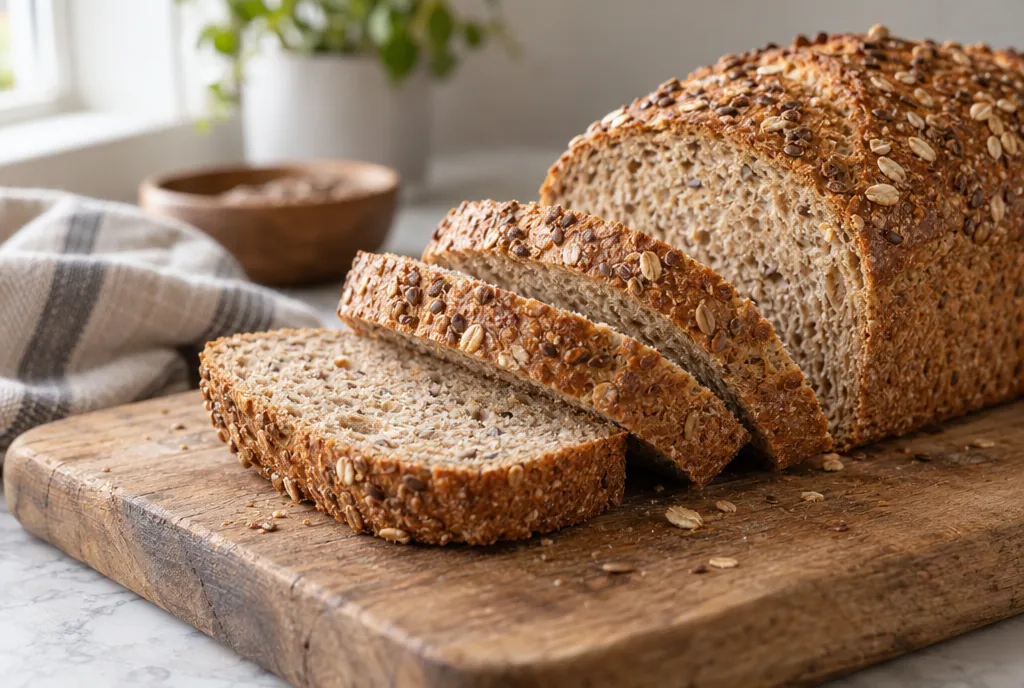
Ingredients appear in descending order by weight, so ingredients nearer the beginning contribute more weight than those listed later (FDA). Look for a clear name such as whole-wheat flour, whole oats, or brown rice.
If water comes first, look next at the grain ingredients; USDA’s grain-identification guidance accounts for a whole grain appearing after water (USDA). Keep reading after you find it.
A leading whole-grain ingredient does not establish the total whole-grain percentage. USDA explains that products can contain several grain ingredients and that their combined weights may require manufacturer information to establish (USDA).
If you see a flour blend, read the individual flour names inside the parentheses. For help with the rest of the package, use how to read a nutrition label.
What the label words actually tell you
Front-of-package wording can sound more whole-grain than the recipe is. Here’s what common terms do and don’t tell you.
| Label word or phrase | What it tells you | Your next check |
|---|---|---|
| Whole-wheat flour | This flour retains the bran, germ, and endosperm (FDA draft guidance). | Read the other grain ingredients too. |
| Wheat flour | This is not the same ingredient as whole-wheat flour; FDA explains that its bran and germ have been removed (FDA draft guidance). | Look for a separately named whole grain. |
| Enriched | Certain nutrients lost in processing have been restored, typically iron and B vitamins; enrichment is distinct from keeping the whole kernel (FDA). | Do not count enriched flour as whole-wheat flour. |
| Multigrain | The word alone does not identify whether the grain ingredients retain the whole kernel; use the whole-kernel definition to evaluate the named ingredients (FDA). | Find the actual grain names rather than relying on the front wording. |
| Made with whole grains | Treat this as a reason to inspect the ingredients, not evidence that every grain is whole; mixtures of whole and refined grains are possible (USDA). | Check where whole grains appear and what follows. |
| Bran | Bran is part of the kernel, and bran-containing products are not necessarily whole-grain products (MedlinePlus). | Check both grain identity and dietary fiber. |
Check fiber without using it as a whole-grain test
Dietary fiber on the label can include naturally occurring fiber and certain added fibers that FDA recognizes for labeling purposes (FDA). That is another reason the fiber number cannot replace the ingredient check.
The dietary fiber Daily Value is 28 g, and FDA’s label guidance advises getting at least that amount (FDA). For a serving, 5% DV or less is considered low and 20% DV or more high under FDA’s general comparison guide (FDA).
Compare similar serving sizes before deciding which food provides more fiber, as FDA recommends for nutrient comparisons (FDA). Then glance at added sugars and sodium rather than letting a whole-grain ingredient make the entire decision for you.
Our fiber food sources guide looks beyond the cereal aisle. Use added sugars on labels when breakfast packages need a closer comparison.
What the current Dietary Guidelines recommend
The 2025–2030 Dietary Guidelines recommend prioritizing fiber-rich whole grains, with a goal of 2–4 servings daily adjusted to individual calorie requirements (Dietary Guidelines). They also recommend significantly reducing highly processed, refined carbohydrates, giving examples including white bread, packaged breakfast options, flour tortillas, and crackers (Dietary Guidelines).
Start with your usual toast, breakfast cereal, or dinner grain and identify a whole-grain option you would enjoy using.
Choose your aisle
Bread
Start with the flour names, then check the rest of the ingredients. Compare loaves you would use for the same purpose, such as sandwiches or breakfast toast.
Choose a texture you enjoy, and try the bread in a familiar meal before buying a larger supply. Put the exact variety on your shopping list so the next trip is easier.
Cereal
Look for a named whole grain near the beginning, then compare dietary fiber, added sugars, and serving sizes. Keep the package beside your bowl while you learn what its stated portion looks like.
Plain oats offer a straightforward starting point: the NHS suggests porridge with fruit or whole oats with yogurt and fruit (NHS). Find more meal combinations in healthy breakfast ideas.
Pasta and rice
For pasta, look for whole-wheat flour or whole durum flour; plain durum flour has had the germ and bran removed (FDA draft guidance). Brown rice is a whole-grain option identified by MedlinePlus (MedlinePlus).
Follow the package’s cooking directions rather than assuming your usual method will suit every variety. Try the new pasta with a familiar tomato sauce, or serve brown rice with vegetables and beans.
Whole grains to put on your list
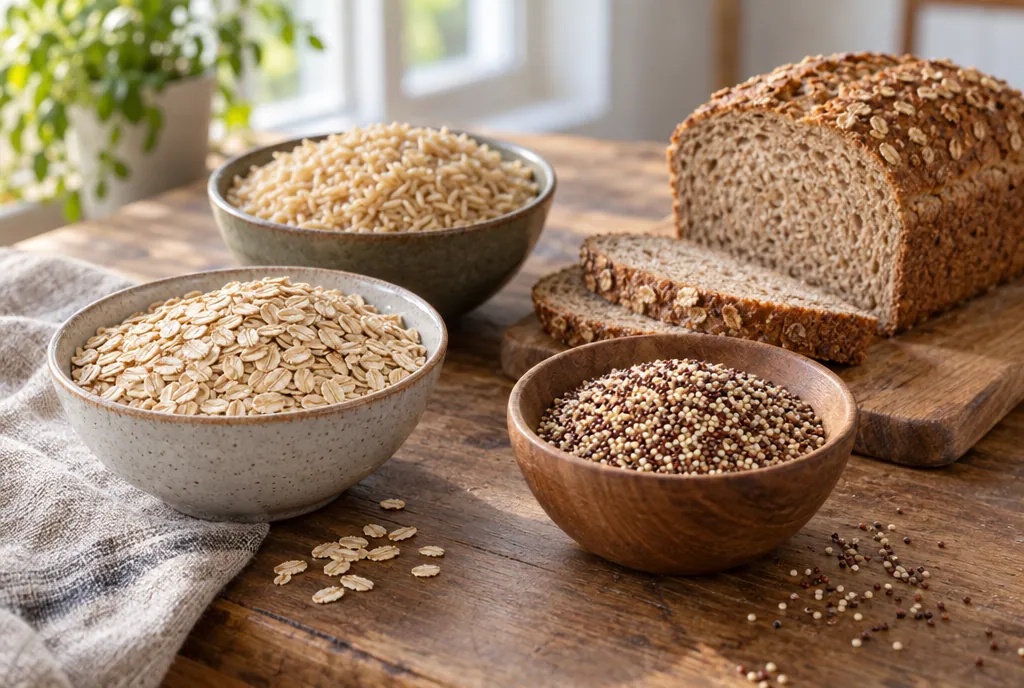
FDA lists options including brown rice, oatmeal, rolled oats, bulgur, quinoa, millet, whole rye, and whole wheat (FDA). You do not need to buy an unfamiliar grain to begin.
Try oats with fruit for breakfast, whole-wheat bread for your usual sandwich, or brown rice alongside dinner. Add an unfamiliar grain only when you have a dish in mind and a place for it in your weekly meal plan.
Your shopping checklist
Keep this checklist with your grocery list. Use it on a food you already buy, then save the variety that works for your meals.
- Find a clearly named whole grain in the ingredients.
- Check its position near the beginning of the list.
- Read the remaining flours and grains, including any flour blend.
- Treat ‘multigrain’ and ‘made with whole grains’ as prompts to read the ingredients.
- Check dietary fiber separately from grain identity.
- Compare similar serving sizes, added sugars, and sodium.
- Check any allergy or medical-diet requirements.
- Choose a food you have a realistic plan to prepare and eat.
Frequently asked questions
Is whole wheat the same as whole grain?
Whole wheat is a type of whole grain; the broader category also includes foods such as brown rice and rolled oats (USDA). When shopping for bread, look for the full ingredient name rather than assuming that the word wheat alone means whole wheat.
Does whole grain listed first mean all the grains are whole?
No. Ingredient order identifies relative weight, and a food can combine whole-grain and refined-grain ingredients (USDA). Read the remaining grain names before deciding what the label tells you. Use the first ingredient as a starting point, not as a complete description of the recipe.
Does a high-fiber label prove a food is whole grain?
No. MedlinePlus notes that foods with added bran can provide fiber without necessarily being whole-grain products (MedlinePlus). Check the ingredient list for whole grains, then use the dietary fiber line to compare the fiber supplied by similar portions.
Can quick oats still be whole grain?
Yes. FDA's draft whole-grain guidance explains that oats processed simply by steaming or flattening retain the bran, germ, and endosperm (FDA draft guidance). For a flavored oatmeal packet, also check its other ingredients and Nutrition Facts rather than judging the whole product from the oats alone.
Sources
- Dietary Guidelines for Americans, 2025–2030 — USDA and HHS
- Managing your weight with healthy eating — MedlinePlus
- Dietary Fiber — FDA Interactive Nutrition Facts Label
- Draft Guidance for Industry and FDA Staff: Whole Grain Label Statements — FDA
- How to Understand and Use the Nutrition Facts Label — FDA
- Grains — USDA Food Buying Guide
- Starchy foods and carbohydrates — NHS