Healthy Snack Ideas Built From the Food Groups
Snack ideas built from the food groups, how to check the label on packaged snacks, and ways to keep portions in view at home, at work and on the go.
Key takeaways
- Nutrister's suggestion (not an official rule): pair two food groups in one snack, such as vegetables with a protein food or fruit with dairy. The 2025–2030 Dietary Guidelines prioritize whole, nutrient-dense foods: protein, dairy, vegetables, fruits, healthy fats and whole grains.
- On a packaged snack, the FDA says 5% DV or less of a nutrient per serving is low and 20% DV or more is high; aim low for added sugars and sodium.
- Label amounts apply to one serving, so check how many servings are in the bag before you eat from it (FDA).
- Throw away perishable food left at room temperature for more than 2 hours (1 hour if the temperature is over 90°F), says USDA FSIS.
A snack that holds you until dinner usually has more than one thing in it. Our suggestion is to pair two food groups, such as crunchy vegetables with a protein food or fruit with yogurt, so you get more variety from a few bites. This guide gives you pairings, a table of amounts, a plan for reading labels on packaged snacks, and ideas for home, work and the road.
Why we suggest pairing two food groups
The 2025–2030 Dietary Guidelines say to prioritize whole, nutrient-dense foods: protein, dairy, vegetables, fruits, healthy fats and whole grains. A snack is a small chance to eat from that list instead of from the vending machine.
Pairing is Nutrister’s practical shortcut, not an official rule; the Dietary Guidelines do not tell you how to build a snack. Pick one food from the table below and add one from a different food group. Apple slices (fruit) with peanut butter (protein foods) is a pairing. So is a small whole-grain toast with a boiled egg.
The same guidelines say to avoid highly processed packaged foods that are salty or sweet, such as chips, cookies and candy that have added sugars and sodium, and to prioritize nutrient-dense foods and home-prepared meals instead. You do not have to give up packaged snacks entirely. You just want them to be the occasional pick, and a label-checked one.
Snack ideas by food group
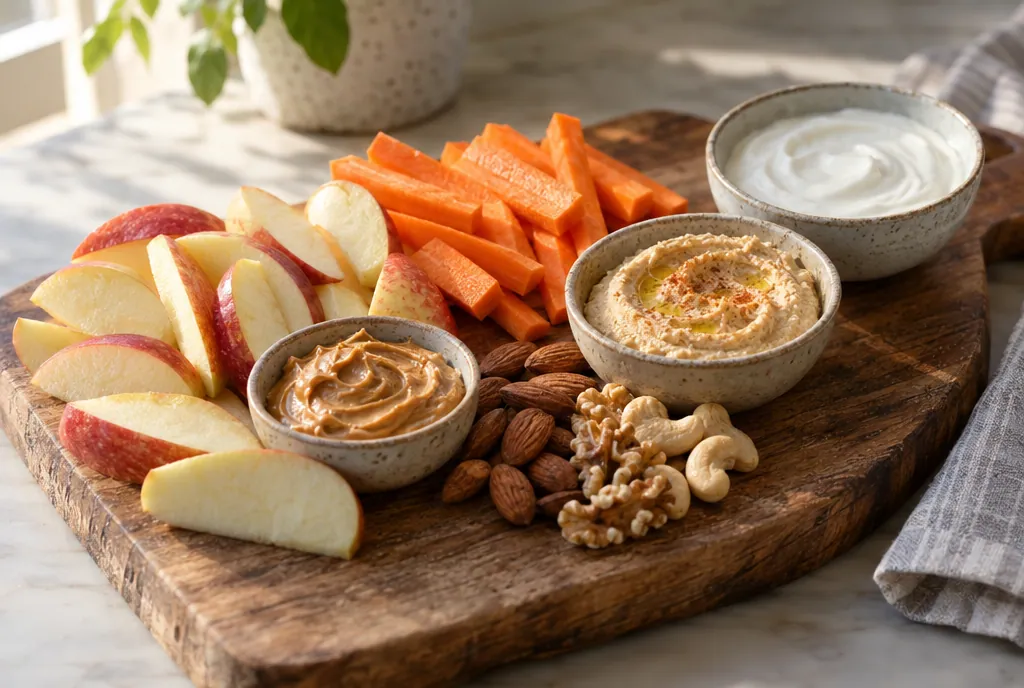
The National Institute on Aging’s sample menu lists snacks such as baby carrots and hummus, celery with natural peanut butter, fruit and yogurt, chili popcorn and bean dip. The table sorts ideas like these by food group and suggests a partner from another group.
| Food group | Snack examples | Pairs well with |
|---|---|---|
| Vegetables | Baby carrots, red pepper strips, celery, cucumber slices | Hummus, bean dip or peanut butter |
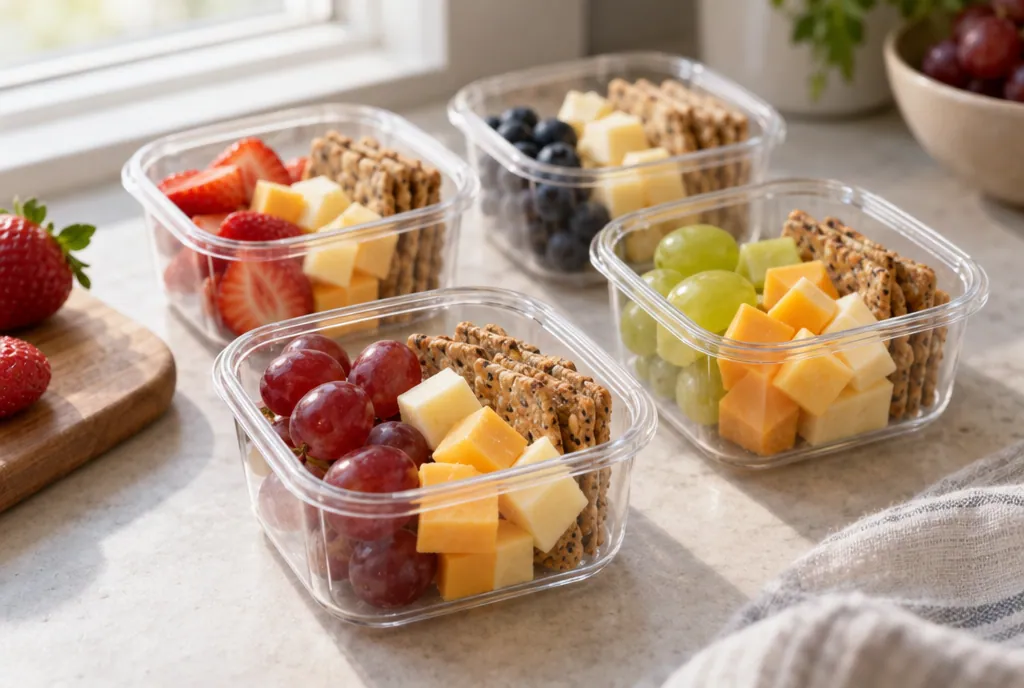
| Fruits | Grapes, a small peach, an apple, berries | Plain yogurt or a slice of cheese |
| Whole grains | Popcorn, whole-grain toast, oatmeal | A handful of nuts or a boiled egg |
| Protein foods | Peanut butter, hummus, a boiled egg, nuts | Vegetable sticks or fruit |
| Dairy | Plain yogurt, cheese, milk | Fruit or whole-grain toast |
The Dietary Guidelines say that when consuming dairy, include full-fat dairy with no added sugars. Plain yogurt topped with fruit gives you sweetness without a sweetened cup.
Pairings to try
- Baby carrots with hummus (vegetables and protein foods)
- Celery with natural peanut butter (vegetables and protein foods)
- Plain yogurt with berries (dairy and fruit)
- Apple slices with a slice of cheese (fruit and dairy)
- Popcorn with a small handful of nuts (grains and protein foods)
- Whole-grain toast with a boiled egg (grains and protein foods)
- Bean dip with red pepper strips (protein foods and vegetables)
Snacks for home, work and on the go
Where you snack decides what you can store, so match the idea to the place.
At home
Home is where fresh food is easiest. Wash and cut vegetables on the weekend so they are ready to grab, and keep hummus or bean dip in the fridge. Cook a few eggs at once for the week.
If you batch-cook for the week, add a snack container to your prep session. Our meal prep basics guide shows how to store what you make.
At work
Keep shelf-stable pairs at your desk: single-serving nut butter with a piece of whole fruit, or popcorn with a small bag of nuts. If you have a shared fridge, label a container of yogurt and cut fruit with your name and the date.
For lunches that include a snack, see our healthy work lunches guide.
On the go
Choose snacks that survive a bag. Whole fruit, a small container of nuts, and a sandwich bag of popcorn all travel well. For anything cold, use an insulated bag with a cold pack.
Carry a water bottle too. The Dietary Guidelines say to choose water (still or sparkling) and unsweetened beverages, and our hydration basics guide covers how much to drink.
Read the label on packaged snacks
Granola bars, crackers, chips and trail mix all come with a Nutrition Facts label. Our guide to reading a nutrition label walks through the whole thing. For snacks, a few lines matter most.
| What to check | What the FDA says |
|---|---|
| Serving size and servings per container | Nutrient amounts and calories on the label refer to the size of one serving |
| Percent Daily Value (%DV) | 5% DV or less per serving is low; 20% DV or more is high |
| Added Sugars | The FDA lists added sugars as a nutrient to get less of; the Daily Value is 50 g on a 2,000-calorie diet |
| Sodium | The FDA lists sodium as a nutrient to get less of; the Daily Value is 2,300 mg |
| Dietary fiber | The FDA lists dietary fiber as a nutrient to get more of |
Use the 5% and 20% rule like a quick filter. If a pretzel snack shows 20% DV or more for sodium in a serving, the FDA would call it high. If a bar shows 5% DV or less for added sugars, it is low. When you compare two snacks, make sure the serving sizes match, as the FDA advises when comparing foods with %DV.
The Dietary Guidelines add that when you pick snacks, added sugar limits should follow the FDA “Healthy” claim limits. To spot sugar in the ingredient list, they say to look for words that include “sugar” or “syrup” or end in “-ose”.
Keep portions in view
The FDA says the serving size reflects the amount people typically eat; it is not a recommendation of how much you should eat. A bag can hold more than one serving, and the numbers double if you eat two.
A few habits keep this simple:
- Check “servings per container” before you open the bag.
- Pour one serving into a bowl or small container instead of eating from the package.
- Buy single-serve packs, or portion a large bag into small containers when you get home.
- On a dual-column label, the per-package column shows what you get if you eat the entire package at one time.
The Dietary Guidelines also say to pay attention to portion sizes, particularly for foods and beverages higher in calories. Nuts, dried fruit and nut butters are good examples, so measure them at first until you know what a serving looks like. If snacks tend to run away from you, the healthy grocery list on a budget guide helps you stock whole foods that are easier to portion.
Snack plan checklist
- Pick two food groups to pair for each snack this week
- Wash and cut vegetables and fruit so they are ready to grab
- Stock at least one protein food snack, such as eggs, hummus or peanut butter
- Check servings per container, Added Sugars and sodium on any packaged snack
- Portion bags of nuts, popcorn or dried fruit into single servings
- Pack an insulated bag and cold pack for cold snacks away from home
- Carry water, and skip sweetened drinks
- Add snack items to your shopping list alongside your meal planning and prep routine
Frequently asked questions
How many snacks should I eat each day?
There is no single number. The Dietary Guidelines say the calories you need depend on your age, sex, height, weight and level of physical activity. Snack when you are hungry between meals, and let the snack count toward your food groups rather than sitting on top of them.
Does the sugar in fruit count as added sugar?
No. The Dietary Guidelines say foods such as fruits and plain milk have naturally occurring sugars that are not considered added sugars. The FDA notes that Total Sugars on the label includes both natural and added sugars, so check the Added Sugars line.
Are crackers a good snack?
It depends on the cracker. The Dietary Guidelines say to significantly reduce highly processed, refined carbohydrates, and they name crackers as an example, while prioritizing fiber-rich whole grains. Check the ingredient list and the Added Sugars and sodium lines, or pick popcorn or whole-grain toast instead.
How long can a packed snack sit in my bag?
For perishable snacks such as yogurt, cheese or cut fruit, USDA FSIS says to discard food left at room temperature for more than 2 hours, or 1 hour when it is above 90°F. Pack an insulated bag with a cold pack to help keep cold food cold.