Family Meal Planning on a Budget
Plan family meals around sales and seasonal produce, stretch staples across several dinners and get kids helping in the kitchen, with a sample week.
Key takeaways
- Start with the store ads. The NIA suggests you try to plan some meals around featured items and consider buying extra nonperishables, such as canned goods, when they are on sale.
- NIDDK says to buy fruits and vegetables in season, when they are cheaper, and that canned beans cost less than meat and fish.
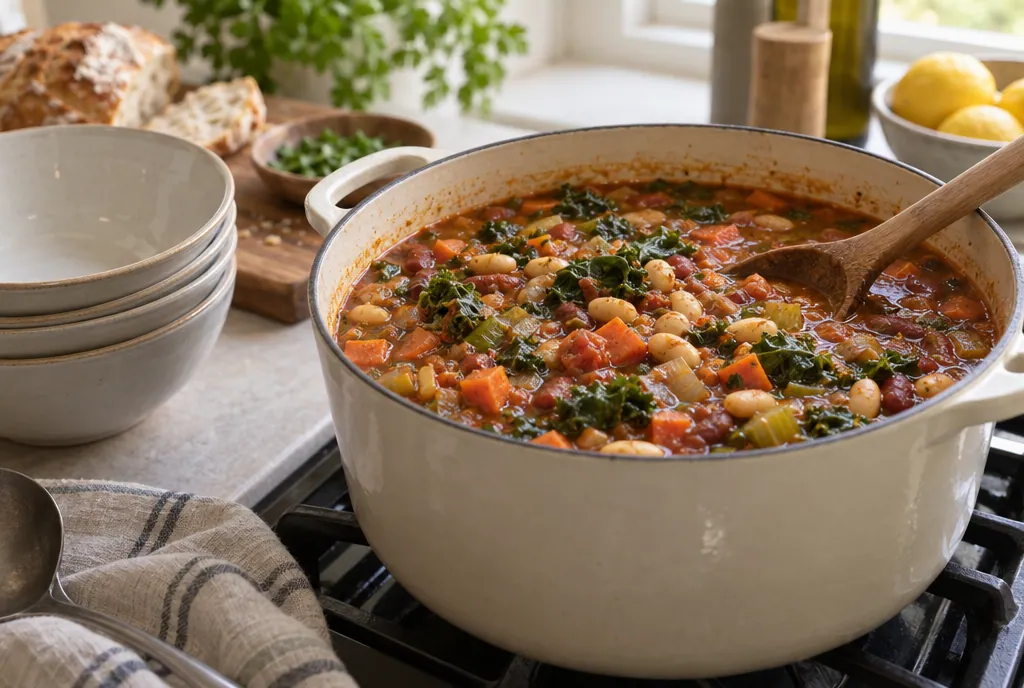
- Cook once for several meals: CDC suggests a large batch of vegetable soup or white bean chicken chili that can last throughout the week or be frozen.
- Let kids help. CDC says even the youngest can help by washing and sorting foods.
Feeding a family well costs less when you decide what you will eat before you shop, build meals from a few low-cost staples, and cook once for several dinners. This guide covers the steps, with a sample week you can copy. It uses no prices because they vary by store and season; compare the price per serving where you shop.
Plan around sales and the season
Start with the store ads, then the menu. The NIA suggests you look for grocery store advertising in the newspaper or online to see what is on sale, plan some meals around featured items, and consider purchasing extra nonperishables such as canned goods when they are on sale.
Seasonal produce is the second lever. NIDDK says to buy fruits and vegetables in season, when they are cheaper. The NIA adds that many nutritious fruits and vegetables, such as bananas, apples, oranges, lettuce, green peppers and carrots, may be reasonably priced.
A simple planning routine
- Look at what you already have in the fridge, freezer and pantry.
- Check this week’s ads and pick the two or three best-priced proteins and vegetables.
- Write four or five dinners that reuse the same ingredients.
- Make a shopping list and stick to it.
CDC says a shopping list helps you reduce impulse buys and take home only the items you need. The FDA gives the same advice: buy only what you need and stick to your shopping list. For a full walkthrough, see how to make a weekly meal plan.
Choose lower-cost staples
A few foods carry a lot of meals. Each has agency guidance behind it:
| Staple | What the guidance says |
|---|---|
| Canned beans | NIDDK: they are loaded with protein, cost less than meat and fish, and make quick additions to meals |
| Frozen and canned produce | CDC: they cost less and last longer; choose canned in water, not syrup |
| Nuts, beans and grains | CDC: consider buying in bulk to keep the pantry stocked |
| Store brands | NIDDK: they may cost less, and often the product’s ingredients are the same as, or very similar to, the popular brands |
| A whole chicken | CDC: use it for several different dishes, such as a stir-fry one night and fajitas another |
Compare Nutrition Facts and ingredients when you switch brands. Our healthy grocery list on a budget has a longer list of foods to stock.
Bulk buying for a family
NIDDK says to avoid buying single portions of snacks, yogurt and other foods, which cost more, and to buy in bulk or larger sizes and divide into smaller portions as needed. A family goes through food faster than one person, but the FDA still cautions to be careful when buying in bulk, especially with items that have a limited shelf life.
Cook once for several meals
The cheapest dinner is often the one you already cooked. CDC suggests you find ways to stretch a recipe: make a large batch of vegetable soup or white bean chicken chili that can last throughout the week, or freeze leftovers to have later, which also means less time in the kitchen than cooking a different meal every night. It adds that different herbs and spices can turn the same ingredients into meals with different flavors.
For storage, FSIS says leftovers can be kept in the refrigerator for 3 to 4 days or frozen for 3 to 4 months. It advises you divide large amounts of food into shallow containers so they cool quickly, and that leftovers must be refrigerated within 2 hours of cooking.
Weeknight
Our own rule of thumb (not an agency figure): aim for about 30 minutes or less on weeknights, and let the freezer do the work. NIDDK suggests you buy frozen or precut veggies and, when you cook, make enough for extra meals. Reheat a frozen portion of last weekend’s soup or casserole instead of starting from scratch.
Weekend
Use one longer session to cook a base: a pot of beans, a tray of roasted vegetables, a pot of soup or chili, and a cooked grain. Portion some for the week and freeze the rest. Our meal prep basics guide gives a prep-session order, and freezer-friendly meals covers what freezes well.
Get kids involved
Cooking together gives kids a stake in dinner. CDC says to involve kids in making healthy snacks and meals, and that even the youngest can help by washing and sorting foods. CDC’s tips are written with young children in mind, so adapt these ideas to your child’s age and skills:
- Let them choose one vegetable or fruit from the sale list.
- Have them wash produce, tear lettuce or stir a pot (with supervision).
- Give a choice between two foods. CDC suggests you give them a choice of different foods to try.
- Serve a new food alongside one they already like.
CDC also suggests freezing small bites of leftover foods to thaw later, which avoids throwing food away.
A sample week without prices
This sample plan is only an illustration; it reuses ingredients so you buy fewer things. Replace any meal with what is on sale or in season near you.
| Day | Dinner | Reuse |
|---|---|---|
| Sunday | Roast chicken, carrots and potatoes | Save the leftover chicken and carcass |
| Monday | Chicken and vegetable stir-fry with rice | Leftover chicken, frozen vegetables |
| Tuesday | White bean and vegetable soup | Make a double batch and freeze half |
| Wednesday | Bean and cheese quesadillas with salad | Canned beans and tortillas |
| Thursday | Pasta with tomato sauce and vegetables | Add canned or frozen vegetables |
| Friday | Soup from the freezer with toast and fruit | No cooking |
| Saturday | Fried rice with eggs and leftover vegetables | Use up what is left in the fridge |
Eat refrigerated leftovers within 3 to 4 days and freeze anything you will not eat in time. The FDA suggests you create a designated space in your fridge for foods that will be going bad within a few days, so you can build Saturday’s meal from that shelf.
Family budget meal-planning checklist
- Look at store ads and plan some meals around featured items
- Check the fridge, freezer and pantry before you write the list
- Choose seasonal fruits and vegetables
- Add canned beans, frozen vegetables and whole grains
- Cook a big pot of soup, chili or casserole and freeze half
- Label freezer containers with the date
- Ask each child to pick a food or help with one age-appropriate task this week
- Read ingredient labels if anyone has a food allergy
You can find more guides in the Meal Planning & Prep hub. This guide is general information; see our medical disclaimer.
Frequently asked questions
How do I plan family meals when prices keep changing?
Start from what is on sale. The NIA suggests you look at grocery store ads, try to plan some meals around featured items, and consider purchasing extra nonperishables such as canned goods when they are on sale. Keep two or three flexible recipes ready to swap in.
Is it cheaper to buy frozen or canned vegetables?
CDC says frozen and canned options cost less and last longer than fresh produce. Choose canned products packed in water, not syrup, and read the label for added sugar or salt. Skip frozen vegetables in butter or cream sauces.
How do I get kids to eat what I cook?
CDC suggests you serve new foods with foods you know they like, let them choose between options and involve them in making meals. It notes it may take 8 to 10 exposures before a young child is willing to try a new food.
How long can I keep batch-cooked meals?
FSIS says leftovers can be kept in the refrigerator for 3 to 4 days or frozen for 3 to 4 months. Divide large batches into shallow containers so they cool quickly, and refrigerate leftovers within 2 hours of cooking.
Sources
- 6 Tips for Eating Healthy on a Budget — Centers for Disease Control and Prevention
- Keep Active & Eat Healthy to Improve Well-being & Feel Great — NIDDK
- Overcoming Roadblocks to Healthy Eating — National Institute on Aging
- Tips to Reduce Food Waste — U.S. Food and Drug Administration
- Tips to Help Your Picky Eater — Centers for Disease Control and Prevention
- Leftovers and Food Safety — USDA Food Safety and Inspection Service
- Food Allergies: The Big 9 — USDA Food Safety and Inspection Service