Healthy Breakfast Ideas for Busy Mornings
Quick breakfast ideas built from the food groups, how to compare cereal, bread and yogurt labels for fiber and added sugars, and make-ahead tips that stay safe.
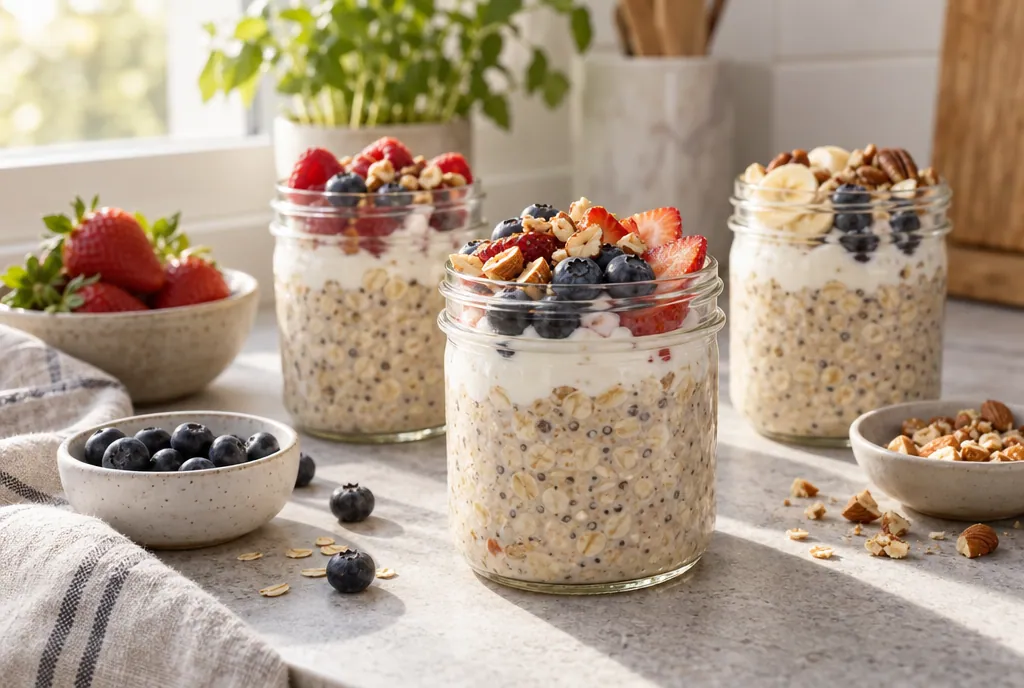
Key takeaways
- Build breakfast from food groups: a protein food, a fruit or vegetable and a whole grain. The 2025–2030 Dietary Guidelines say to prioritize protein foods at every meal.
- On a label, 5% DV or less of a nutrient per serving is low and 20% DV or more is high, so look for higher fiber and lower added sugars.
- The Dietary Guidelines say one meal should contain no more than 10 grams of added sugars, so check the Added Sugars line on sweetened cereals and flavored yogurts.
- Cooked make-ahead breakfasts are leftovers: FSIS says to refrigerate leftovers within 2 hours and keep them 3 to 4 days. FSIS has no specific advice for overnight oats, so we suggest the same window.
A good busy-morning breakfast has a protein food, a fruit or vegetable and, if you like, a whole grain, and it takes five minutes or less to put together. Below are ideas sorted by how much time you have, plus how to read the label on cereal, bread and yogurt so a quick breakfast doesn’t turn into a sugary one.
Start with the food groups
You don’t need a recipe for breakfast. You need a short list of pieces you can mix and match. The 2025–2030 Dietary Guidelines for Americans say to prioritize protein foods at every meal and to eat vegetables and fruits throughout the day. They list eggs, poultry, seafood, beans, peas, lentils, nuts, seeds and soy among protein foods.
The same document asks you to focus on whole grains and to include full-fat dairy with no added sugars when you eat dairy. Our guide to building a balanced plate shows the groups together.
Here are combinations that cover several groups at once:
| Combination | Protein food | Fruit or vegetable | Grain or dairy |
|---|---|---|---|
| Egg on toast with fruit | Egg | Orange slices or berries | Whole-grain toast |
| Yogurt bowl | Plain yogurt | Berries or banana | Oats or whole-grain cereal |
| Peanut butter banana toast | Peanut butter | Banana | Whole-grain bread |
| Veggie scramble wrap | Eggs | Spinach, peppers, tomatoes | Whole-wheat tortilla |
| Overnight oats | Milk, yogurt and chia or nuts | Apple or berries | Rolled oats |
| Cottage cheese and fruit | Cottage cheese | Pineapple or peaches | Whole-grain crackers |
| Bean and egg breakfast bowl | Beans and egg | Salsa, avocado | Leftover brown rice |
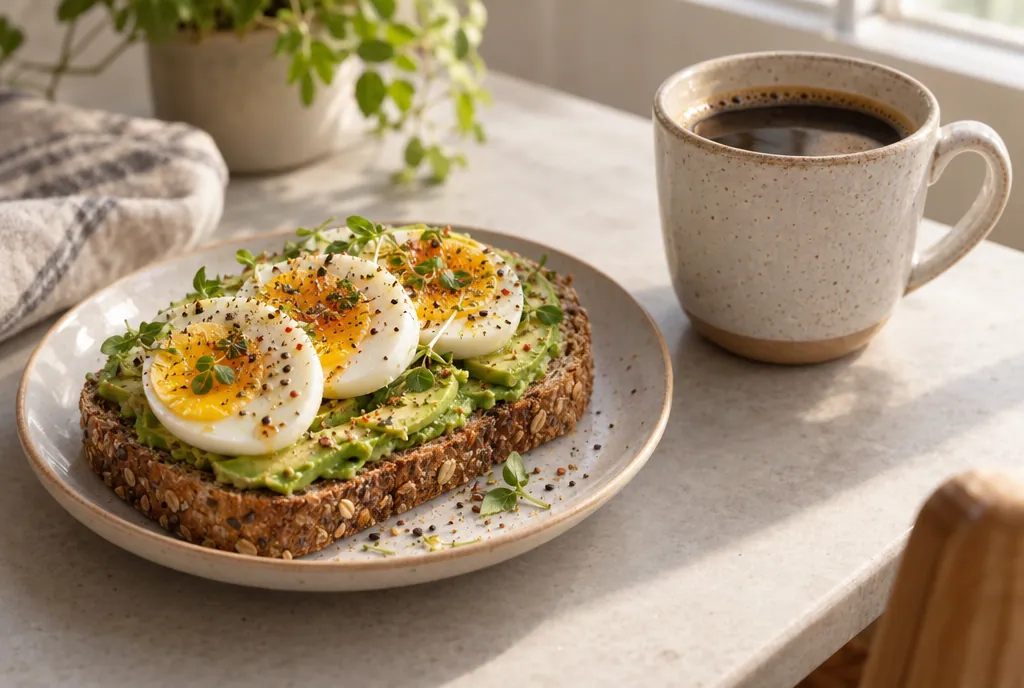
Pick the right breakfast for your morning
5 minutes
- Plain yogurt, a sliced banana and a handful of oats or nuts.
- Whole-grain toast with peanut butter and an apple.
- Scrambled eggs with a handful of spinach, stirred in at the end so it wilts in the heat.
- Cottage cheese with canned or frozen fruit. Check that fruit is packed in water or juice with no added sugars.
Keep a few shelf-stable pieces on hand for mornings when the fridge is empty: oats, nut butter, whole-grain bread in the freezer, and canned or frozen fruit.
Make ahead
- Overnight oats: stir rolled oats with milk or yogurt in a jar and refrigerate. Add fruit in the morning.
- Egg muffins: whisk eggs with chopped vegetables, bake in a muffin tin, cool and store in the fridge or freezer.
- Hard-boiled eggs: cook a batch on your prep day and peel as needed.
- Breakfast burritos: fill whole-wheat tortillas with eggs, beans and vegetables, wrap individually and freeze.
Our weekly meal plan guide shows how to slot a prep session into your week.
On the go
- A hard-boiled egg, a piece of fruit and a small bag of nuts.
- A jar of overnight oats or yogurt with a spoon, packed with an ice pack.
- A peanut butter sandwich on whole-grain bread and a banana.
- A reheated breakfast burrito in a lunch bag.
Pack anything perishable with a cold source. FSIS says to throw away perishable foods left at room temperature for more than 2 hours (1 hour if the temperature is over 90°F).
Choose cereal, bread and yogurt by the label
Packaged breakfast foods vary a lot from brand to brand, so the Nutrition Facts label is the quickest way to compare them. The FDA’s page on how to understand and use the Nutrition Facts label is the source for the steps below.
- Start with the serving size. Every number on the label refers to one serving. If your bowl of cereal is twice the listed serving, double the numbers.
- Check the fiber line. The FDA lists dietary fiber among the nutrients to get more of, and says 5% DV or less is low and 20% DV or more is high. The Daily Value for dietary fiber on that page is 28g.
- Check Added Sugars. The same FDA page lists added sugars among the nutrients to get less of, with a Daily Value of 50g. The “Includes” wording means added sugars are counted within Total Sugars.
- Look at the ingredient list. The Dietary Guidelines say to look for ingredients that include the word “sugar” or “syrup” or end in “-ose”. For bread, a whole grain listed first is a good sign.
- Compare two products with the same serving size. The FDA says to use %DV to compare, as long as the serving size is the same.
Use this quick reference at the shelf:
| Product | What to look for | Watch for |
|---|---|---|
| Cereal | Higher %DV for fiber; whole grain near the top of the ingredients | Added sugars and large serving sizes |
| Bread | Whole grain listed first; fiber per slice | Sugar or syrup high in the ingredients |
| Plain yogurt | Short ingredient list; no added sugars | Flavored cups with added sweeteners |
| Flavored yogurt | Compare Added Sugars across brands | A single cup that uses up most of a meal’s limit |
For example, the FDA’s label page shows a sweetened yogurt with 7 grams of Added Sugars and 8 grams of naturally occurring sugars, for a total of 15 grams of sugar. Plain yogurt topped with fruit lets you control the sweetness.
Make-ahead breakfasts and food safety
Cooked make-ahead breakfasts, such as egg muffins and burritos, are leftovers on a schedule, so the FSIS leftovers advice applies to them. FSIS has no page that covers overnight oats specifically. Because they are a perishable mix of oats and milk or yogurt, we suggest following the same refrigerator limits as a cautious rule of thumb. The FSIS points:
- Leftovers must be refrigerated within 2 hours of cooking.
- Leftovers can be kept in the refrigerator for 3 to 4 days or frozen for 3 to 4 months.
- Cooked egg dishes keep 3 to 4 days in the refrigerator, and hard-cooked eggs keep 1 week.
- FSIS says to make sure leftovers reach 165°F as measured with a food thermometer when reheating, which applies to egg muffins and burritos.
- Refrigerators should be set to maintain a temperature of 40°F or below.
Busy-morning breakfast checklist
- Keep three or four breakfast staples stocked: oats, eggs, yogurt, fruit, whole-grain bread
- Pick one protein food for each breakfast
- Add a fruit or vegetable
- Compare labels for fiber and Added Sugars before buying cereal, bread or yogurt
- Prep one make-ahead item on your weekly cook day
- Label jars and containers with the date
- Pack a cold source with anything perishable you carry out the door
For more ideas, see all of our Meal Planning & Prep guides. This guide is general information; see our medical disclaimer.
Frequently asked questions
Is it okay to skip breakfast?
The Dietary Guidelines ask you to prioritize protein foods at every meal. If you do eat in the morning, use the same food groups as other meals. If you have diabetes or take medication with food, ask your doctor or dietitian.
How do I know if a cereal has too much added sugar?
Check the Added Sugars line on the Nutrition Facts label and compare it to the serving size. The FDA lists 50g as the Daily Value for added sugars, and the Dietary Guidelines say one meal should contain no more than 10 grams.
How long do hard-boiled eggs keep?
FSIS lists hard-cooked eggs at 1 week in the refrigerator. FSIS says refrigerators should be set to maintain a temperature of 40°F or below, and FSIS says to throw away perishable foods left at room temperature for more than 2 hours.
Can I leave overnight oats in the fridge all week?
FSIS does not publish a storage time for overnight oats. Its leftovers page says leftovers can be kept in the refrigerator for 3 to 4 days, so as a cautious rule of thumb we suggest the same window: make small batches, date the jars and eat them within 3 to 4 days.