Healthy Meal Planning for One
Plan, shop and cook for one person without waste: buy small, cook once to eat twice, freeze single portions and follow a simple weekly plan.
Key takeaways
- Cooking for one works best when you cook once and eat twice: make a bit extra and refrigerate it, since leftovers keep 3 to 4 days in the refrigerator.
- Freeze single portions of what you will not finish. FSIS says leftovers can be frozen for 3 to 4 months, and that food stored constantly at 0 °F will always be safe.
- Shop small. The FDA says to be careful when buying in bulk, especially with items that have a limited shelf life, so save bulk for foods that keep.
- Frozen and canned produce is a practical fit for one: CDC notes they cost less and last longer than fresh.
Cooking for one has its own problem: most recipes and packages are sized for a family, so you end up with too much of one thing and not enough variety. The fix is to plan around a few flexible ingredients, cook a little extra on purpose, and freeze single portions before they go to waste.
Shop small, and be choosy about bulk
Start with the plan, not the store. The FDA suggests you preplan and write your shopping list, think about the meals you will prepare the following week, and check your fridge for what you already have. For one person, that list might be only four or five dinners with overlapping ingredients.
What to buy in smaller amounts
- Fresh produce that spoils quickly, such as leafy greens, berries and fresh herbs. Buy what you will use in the next few days.
- Meat, poultry and fish in small packs, or larger packs you portion and freeze the day you buy them.
- Bread, milk and yogurt in sizes you will finish before they turn.
The FDA also points out that peeled or cut vegetables should be refrigerated to keep them from going bad, so put them in the fridge as soon as you cut them.
Where frozen and canned foods help
Frozen and canned produce is made for small households. CDC says frozen and canned options cost less and last longer than fresh, and that many frozen vegetables and fruits have resealable packaging that allows you to use what you need and store the rest. Look for canned options packed in water rather than syrup, and read the label for added sugar or salt. Skip frozen vegetables with butter or cream sauces.
Bulk only for foods that keep
The FDA says to be careful when buying in bulk, especially with items that have a limited shelf life. CDC’s budget tips suggest nuts, beans or grains are the kind of items to consider buying in bulk. Dry goods like rice, oats and dried beans fit the bill because you can scoop out what you need.
Cook once, eat twice
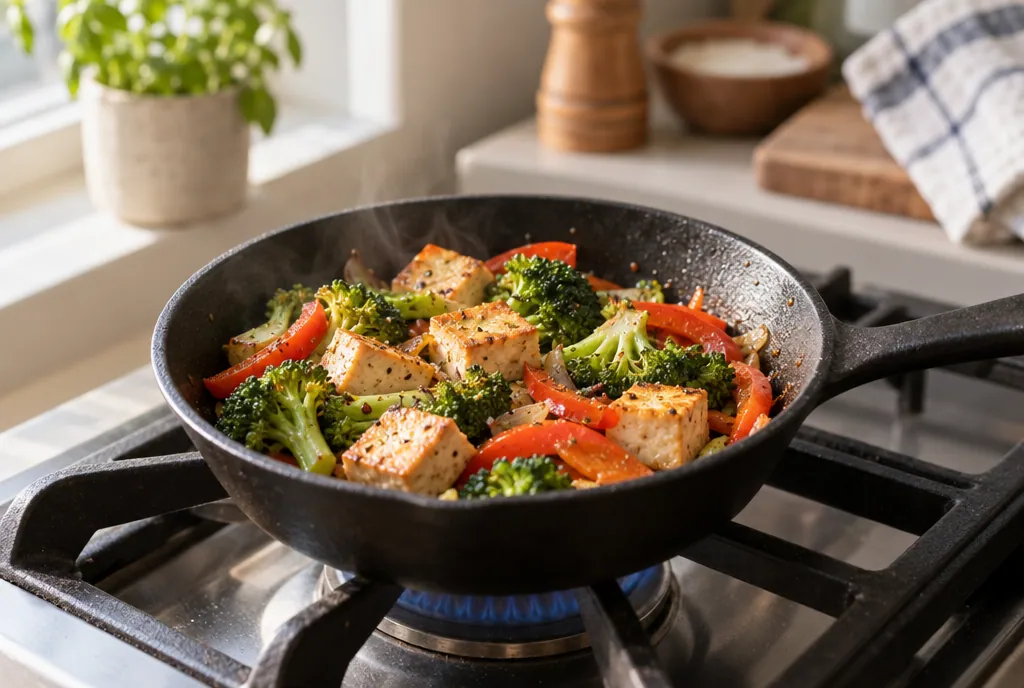
When you cook, make enough for extra meals. NIDDK suggests casseroles with vegetables and whole grains, or a whole cooked chicken, may last a few days so you do not have to cook another meal every day. CDC gives a similar example: cook a whole chicken and use it for several different dishes, such as a stir-fry one night and fajitas another.
For one person, the simplest pattern is to cook a base on one day and turn it into two different meals:
- Roast a tray of vegetables, then serve some with eggs on Monday and stir the rest into pasta or a grain bowl on Tuesday.
- Cook a pot of beans or lentils, then have soup first and a wrap or salad topping next.
- Bake two chicken thighs, then slice one into a sandwich the next day.
Change the seasoning, sauce or side and it feels like a new meal.
Freeze single portions
Freezing is the single biggest tool for cooking for one. The FDA says to use your freezer, since freezing is a great way to store most foods to keep them from going bad until you are ready to eat them.
How to freeze well
- Freeze while it is fresh. FSIS says that if food is frozen at peak quality, thawed foods emerge tasting better than foods frozen near the end of their useful life.
- Cool and portion first. FSIS advises that you divide large amounts of food into shallow containers so it cools quickly, and that you wrap leftovers in airtight packaging or seal them in storage containers.
- Spread packages out. FSIS says never stack packages to be frozen; spread them in one layer and stack only after they are frozen solid.
- Label with the date. FSIS notes that freezer storage times are for quality only, but a date on every bag tells you what to eat first.
The FDA gives the freezer target as 0 °F. FSIS says to keep an appliance thermometer in your freezer to check the temperature.
Some foods freeze better than others
FSIS says you can freeze almost any food, but that some foods simply do not freeze well. Its examples are mayonnaise, cream sauce and lettuce. Soups, stews, cooked grains and casseroles are good candidates for single portions. Our guide to freezer-friendly meals goes deeper on what works.
Thaw and reheat
FSIS lists three safe ways to thaw: the refrigerator, cold water and the microwave oven. Reheat to 165 °F as measured with a food thermometer, and cover food while reheating.
A one-person weekly plan
This sample week is only an illustration. It uses the cook-once, eat-twice idea and the storage windows from the FSIS leftovers page, which says leftovers keep 3 to 4 days in the fridge. Swap in foods you like.
| Day | Dinner | Prep note |
|---|---|---|
| Sunday | Roast chicken thighs, roasted vegetables, rice | Cook extra rice and vegetables; portion two servings to freeze |
| Monday | Chicken, vegetable and rice bowl | Leftovers from Sunday |
| Tuesday | Bean and vegetable soup | Make four portions; eat one, refrigerate one, freeze two |
| Wednesday | Eggs with sauteed frozen vegetables and toast | Quick, no planning needed |
| Thursday | Soup from Tuesday with a side salad | Reheat to a rolling boil |
| Friday | Pasta with tomato sauce and canned white beans | Pantry meal |
| Saturday | Flexible: eat out, or thaw a frozen portion | Use the freezer instead of buying more |
The days are a template, not a rule. If your Wednesday changes, move the soup earlier or freeze it instead. For a method that scales this up, see how to make a weekly meal plan.
No time
Lean on frozen vegetables, canned beans and eggs. NIDDK suggests you buy frozen or precut veggies to add to a salad, or microwave them and add them to whole-grain pasta. Cook one thing on the weekend and call it done.
Some time
Our suggestion (not an official guideline): set aside a session of about 45 minutes once a week to roast a tray of vegetables, cook a grain, and simmer a pot of soup. Freeze half the soup in single portions. Our meal prep basics guide covers the order of tasks.
Like to cook
Treat leftovers as ingredients. The FDA encourages you to create new dishes and snacks with leftovers or items you think will go bad if not eaten soon. Roast chicken becomes soup, fried rice or salad toppers.
Avoid waste without extra effort
The FDA’s food waste page has a few habits that suit one-person kitchens:
- Create a designated space in your fridge for foods that will be going bad within a few days.
- Check your fridge often, and eat or freeze items before you would have to throw them away.
- Learn date labels: the FDA says confusion over date labeling accounts for an estimated 20 percent of consumer food waste. Check for signs of spoilage on foods past their “Best if Used By” date.
Cooking for one checklist
- Write a short list of four or five dinners with overlapping ingredients
- Check what you already have before you shop
- Buy perishables in small amounts and keep bulk for foods that keep
- Pick up frozen or canned vegetables and beans for fast meals
- Cook extra on purpose and portion it into shallow containers
- Freeze single portions with the date on the label
- Keep a “use soon” spot in the fridge
- Check that your freezer is at 0 °F with an appliance thermometer
For more ideas, browse the Meal Planning & Prep hub or the healthy grocery list on a budget.
Frequently asked questions
How do I stop wasting food when I cook for one?
Write a list based on the meals you plan and check what you already have, as the FDA suggests. Keep a spot in the fridge for foods that will go off soon, and eat or freeze them before you would need to throw them away.
How long can I keep cooked food from a batch recipe?
FSIS says leftovers can be kept in the refrigerator for 3 to 4 days or frozen for 3 to 4 months. Freeze portions you will not eat within a few days, ideally while they are still fresh.
Is it safe to reheat a frozen portion without thawing it first?
FSIS says it is safe to reheat frozen leftovers without thawing, though it takes longer. Reheat until the food reaches 165 °F as measured with a food thermometer, and bring soups, sauces and gravies to a rolling boil.
Is it cheaper to buy in bulk when I live alone?
Only for foods you will finish or can freeze. CDC suggests buying nuts, beans or grains in bulk to keep a pantry stocked, while the FDA cautions about bulk items with a limited shelf life. Check the price per serving, not just the package.
Sources
- Leftovers and Food Safety — USDA Food Safety and Inspection Service
- Freezing and Food Safety — USDA Food Safety and Inspection Service
- Tips to Reduce Food Waste — U.S. Food and Drug Administration
- 6 Tips for Eating Healthy on a Budget — Centers for Disease Control and Prevention
- Keep Active & Eat Healthy to Improve Well-being & Feel Great — NIDDK